
Te Whitu Kahurangi Hotere
Tā Moko and Kirituhi
Ko Te Rarawa me Ngāti Mutunga ngā iwi, ko Te Tāo Maui te hapū. Ko Te Whitu Kahurangi Hotere tōna ingoa.
Te Whitu Kahurangi Hotere was born and raised in Manurewa, South Auckland. He has been fortunate to learn under experienced kaiwhakairo (traditional Māori carvers), including Jay Rawiri Mason and Bobby Te Huia, while also studying at Te Wānanga o Aotearoa.
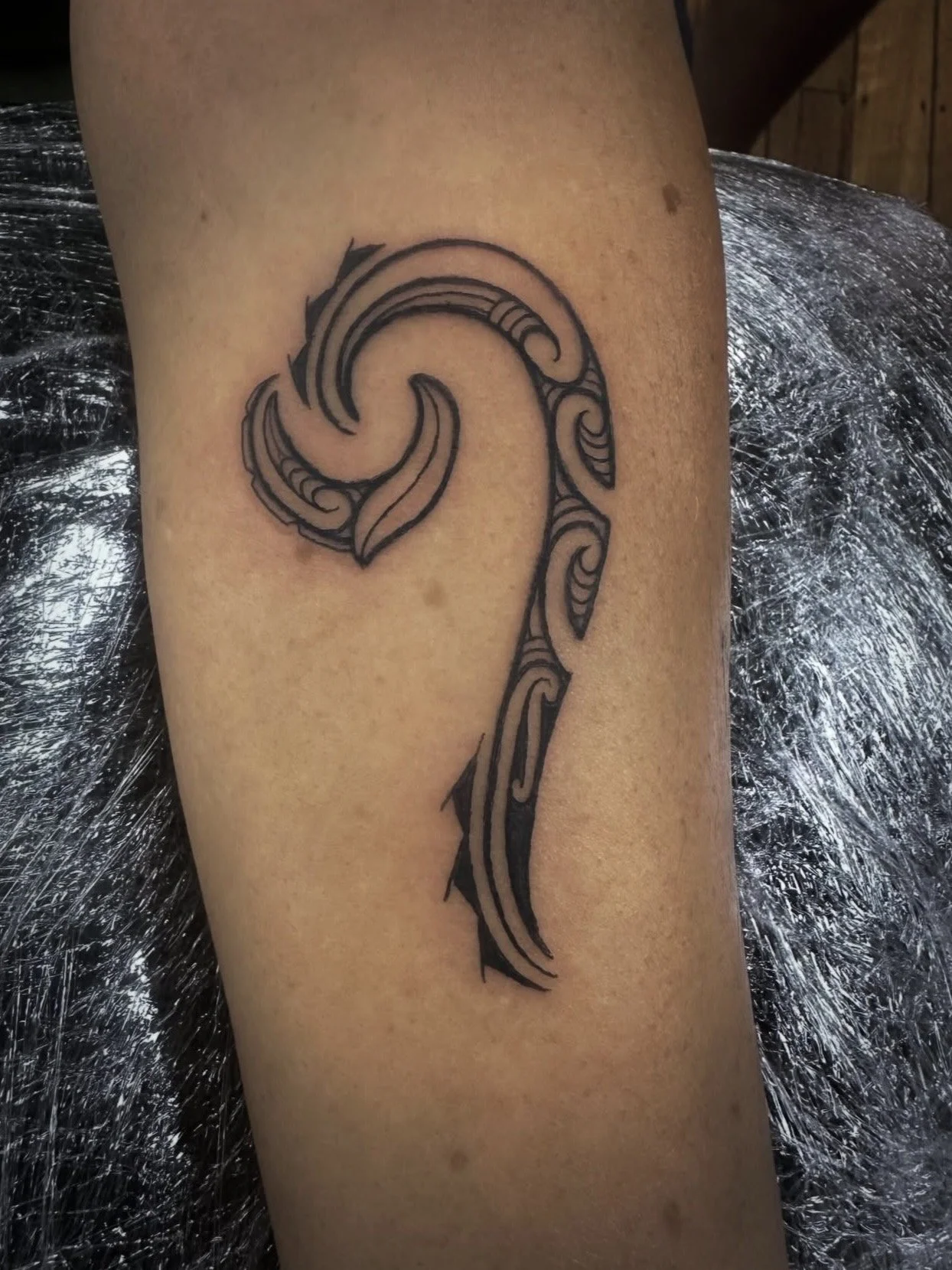
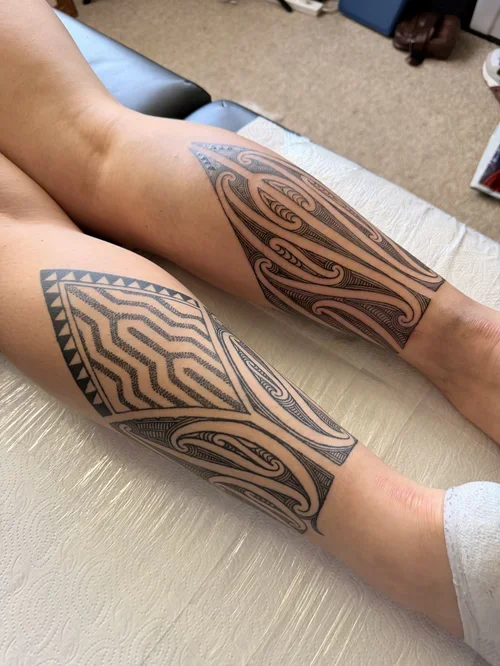
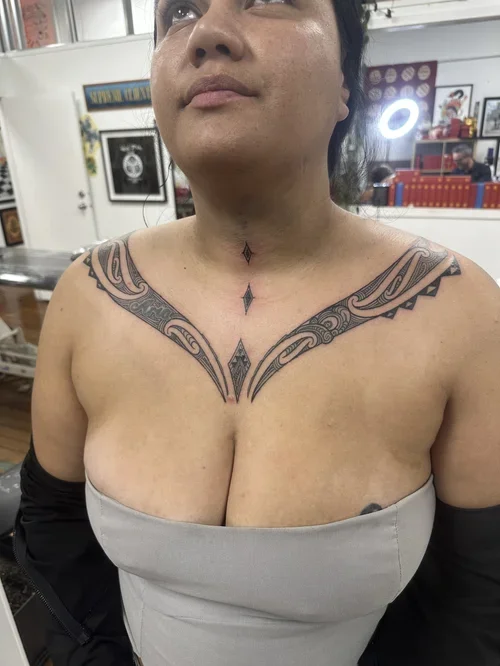
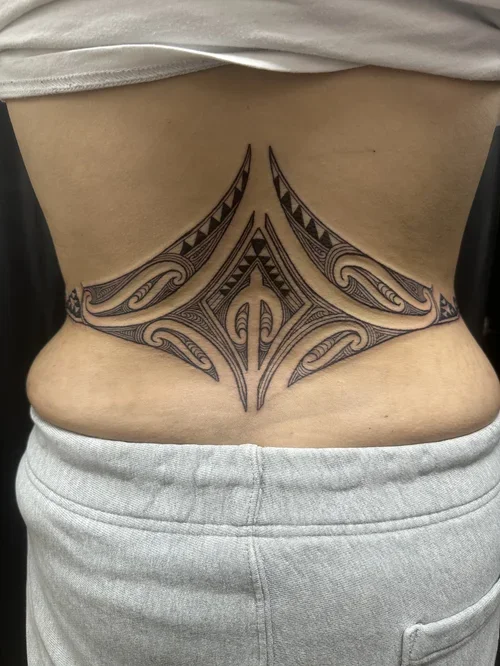
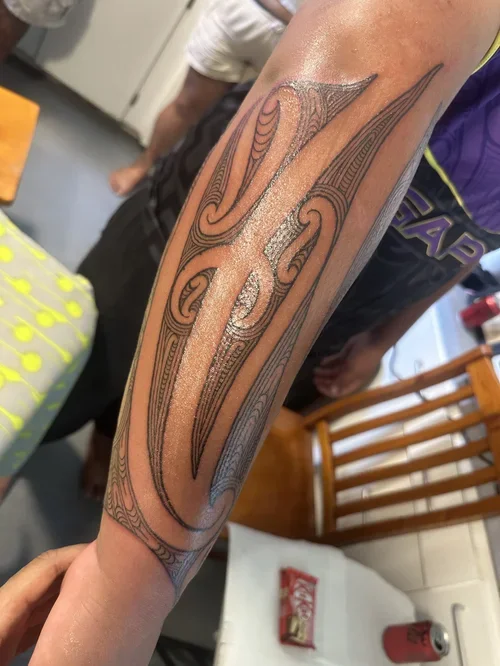
Through the knowledge, resources, and research methods gained from studying whakairo (traditional Māori wood carving), he has adapted these practices into his work by embedding them into the skin.
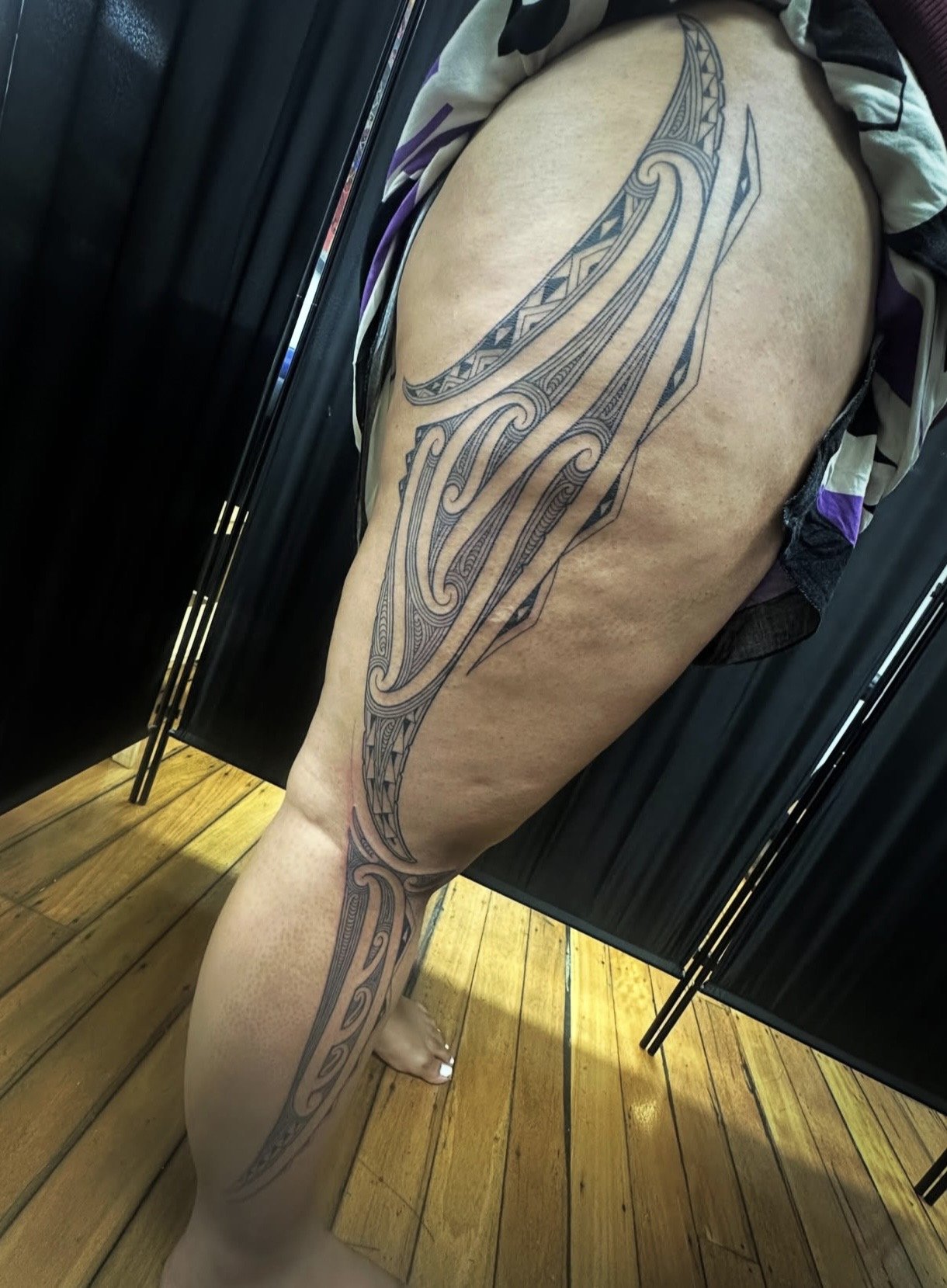
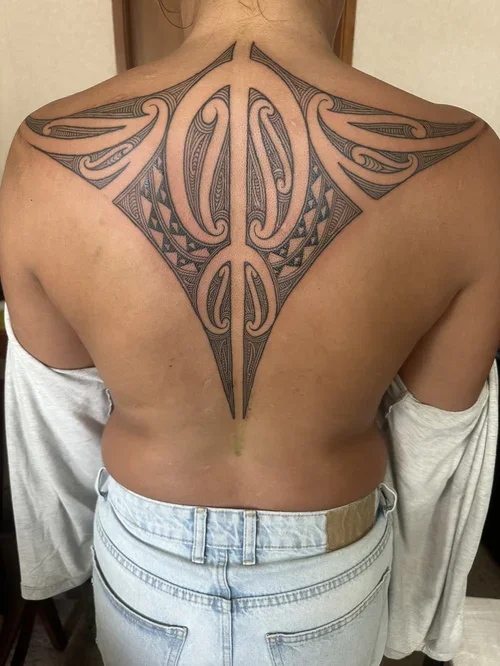
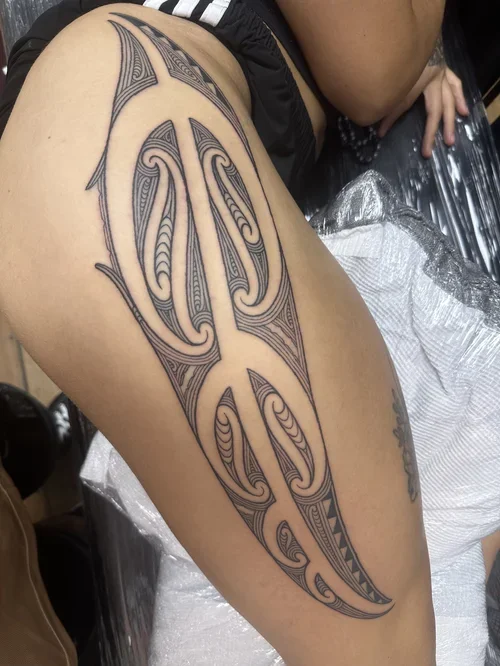
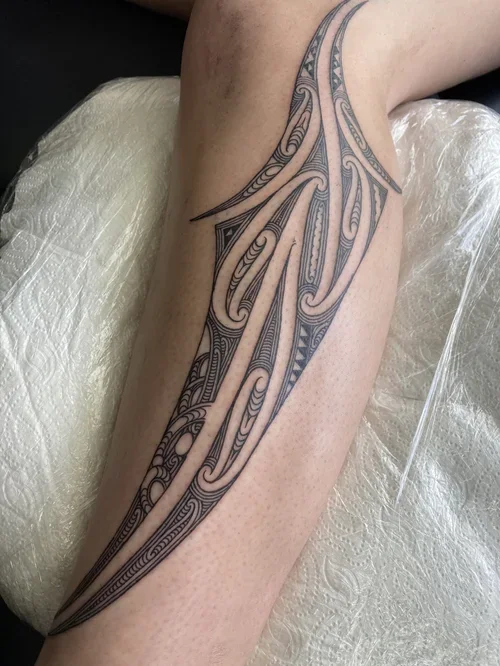
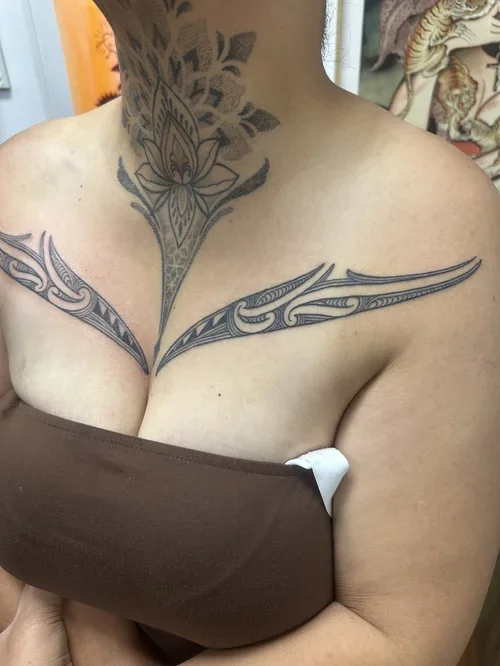
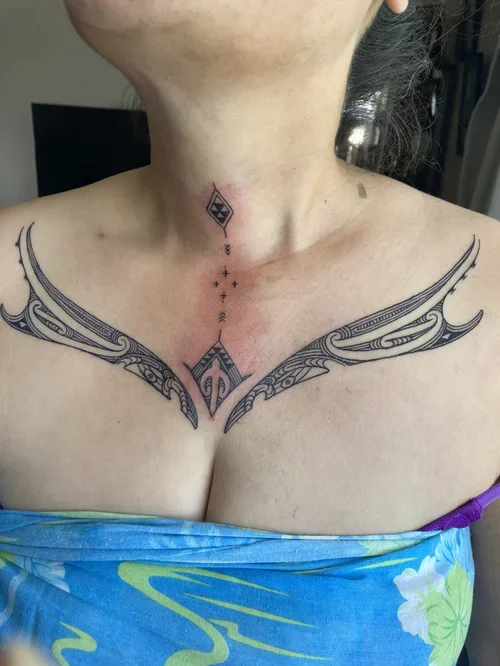
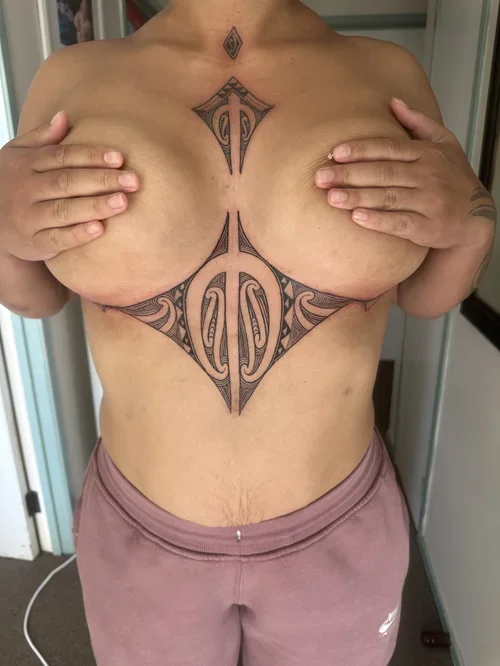
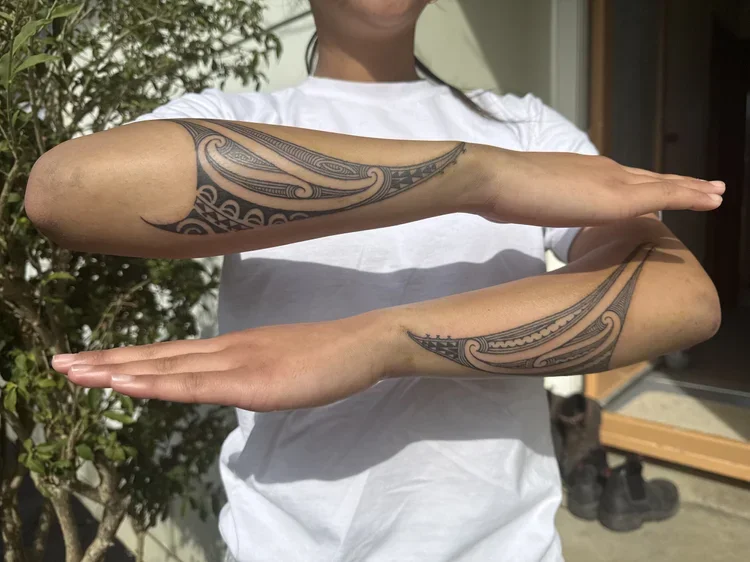
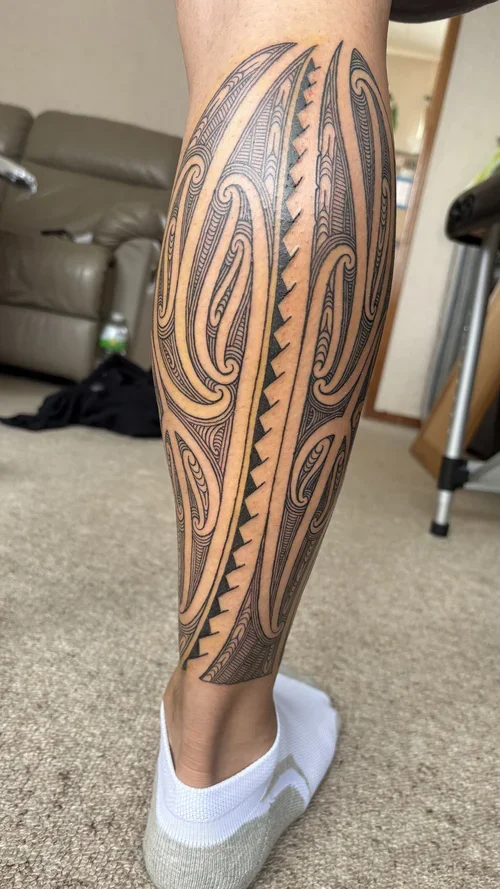
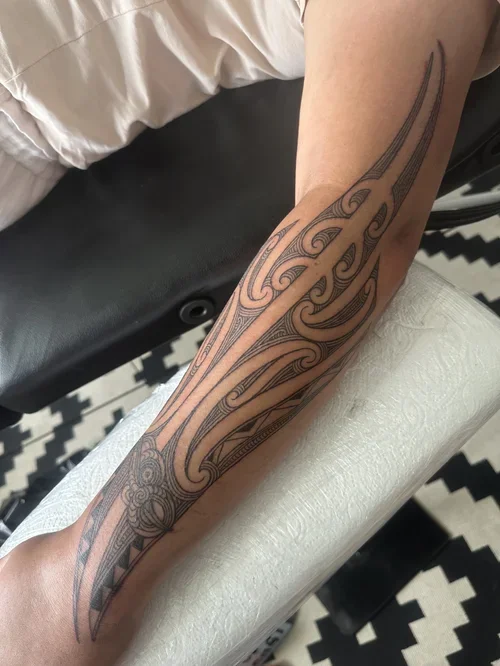
Te Whitu specialises in tā moko and kirituhi, using traditional Māori patterns and motifs to represent Māori culture, ancestry, tribal affiliations, and journeys of self-discovery for both Māori and tauiwi.
He has spent over 10 years involved in his own mahi toi projects, including 5–6 years of tattooing experience, spending the past year tattooing in a professional studio.
How did you get your start or become interested in tattooing?
Tā moko has always been a big thing within the arts of Te āo Māori, regardless of it being lost for a while. Growing up in a marae environment, I was exposed to the art of carving, tukutuku and kowhaiwhai. You could say i was developing my passion for tā moko unconsciously. Seeing all my uncles and aunties with beautiful tā moko, and also watching my mum get her Moko when I was a lot younger. From that point on I always wanted a tā moko.
As I got older and more aware of my capabilities and knowledge of te āo Māori. I applied it to pen and paper, at first my passions developed for whakairo, but once my whakairo teacher taught me how to set up a tattoo machine, i didn’t want to go back to carving, I was hooked.
What drew you to the style you specialise in?
Whakairo = (traditional Māori carving)
Kowhaiwhai = (patterns that repeat. Rotate, mirror an reverse)
Rāranga = (traditional Māori weaving and tapestry)
The three art forms feed of each other, using different dimensions for the same patterns and putting a unique twist to it.
Being able to be as creative as you can. The use and application of each pattern and making it flow with the body. The creative freedom of Moko, by understanding the base meanings of each patterns opens a whole world of creativity.
What’s your “one day I’ll tattoo this” Wishlist?
Pūhoro
Mataora
Moko Kauae
The most prominent, most ancient and traditional forms of taamoko. To have the honour to inscribe these marking not only for its tradition value. But being able to understand the meaning of patterns and fitting it with the individuals tribal association and whakapapa, making all individual Moko kanohi and puhoro unique and not all the same.
Do you have a favourite subject matter to tattoo?
Just Tā moko!
What do you get up when you’re not tattooing?
I never find myself not drawing or something to do with art. General art is a safe space for me, a way to express and create with no boundaries. I love reading information on indigenous skin art from all over the world, including modern day tattooing, visiting museums and art galleries to look at art. Mainly filling my basket with knowledge I’ve learned and practiced so far and logging it.