
Ta Moko
Ta Moko is the application of traditional Maori tattoo. Since it's revival from near extinction in the early 20th century, Tikanga (protocols) surrounding Ta Moko have changed. Traditionally applied using Uhi (chisels) Moko is now largely done using tattoo machines. Maori have always been quick to adapt to new technology; when steel tools became available in the 19th century, some of the most detailed Whakairo (carving) was produced. The same with Moko, the designs we use today have evolved from those of our ancestors and will continue to do so for generations to come.
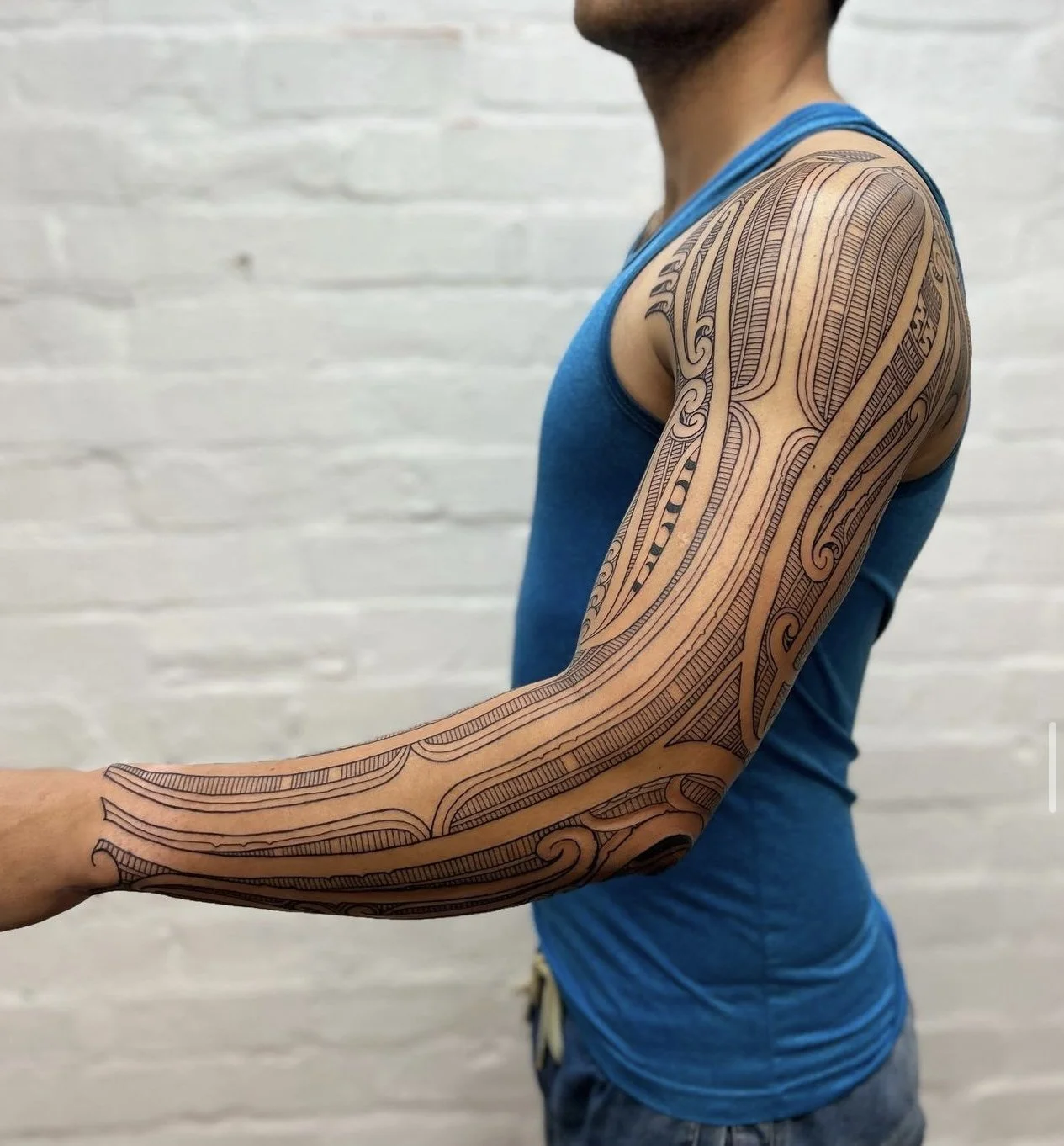
Done by Fern Ngatai
What does contemporary Moko represent for the wearer?
Ta Moko has always been a visual interpretation of the wearer's Whakapapa (genealogy). Nowadays, people might have designs to represent family members, Kaitiaki (spiritual guardian) and milestones. For many Maori, Ta Moko is a way of expressing and connecting to their cultural identity. For non-Maori, the patterns can also represent family and tell a story of the wearers life and personality but they don't have the same connection to whakapapa as they do for Maori.
Who is allowed to wear Moko?
Being a practice so deeply rooted in Maori history and culture, Ta Moko must be approached respectfully, whether by Maori or Non-Maori. Anyone who is passionate about connecting with and immersing themselves in Maori culture should be able to wear a Moko. If someone is worried about cultural appropriation, it is always helpful to seek the advice of a Ta Moko artist so they can explain the significance of wearing traditional Maori patterns.
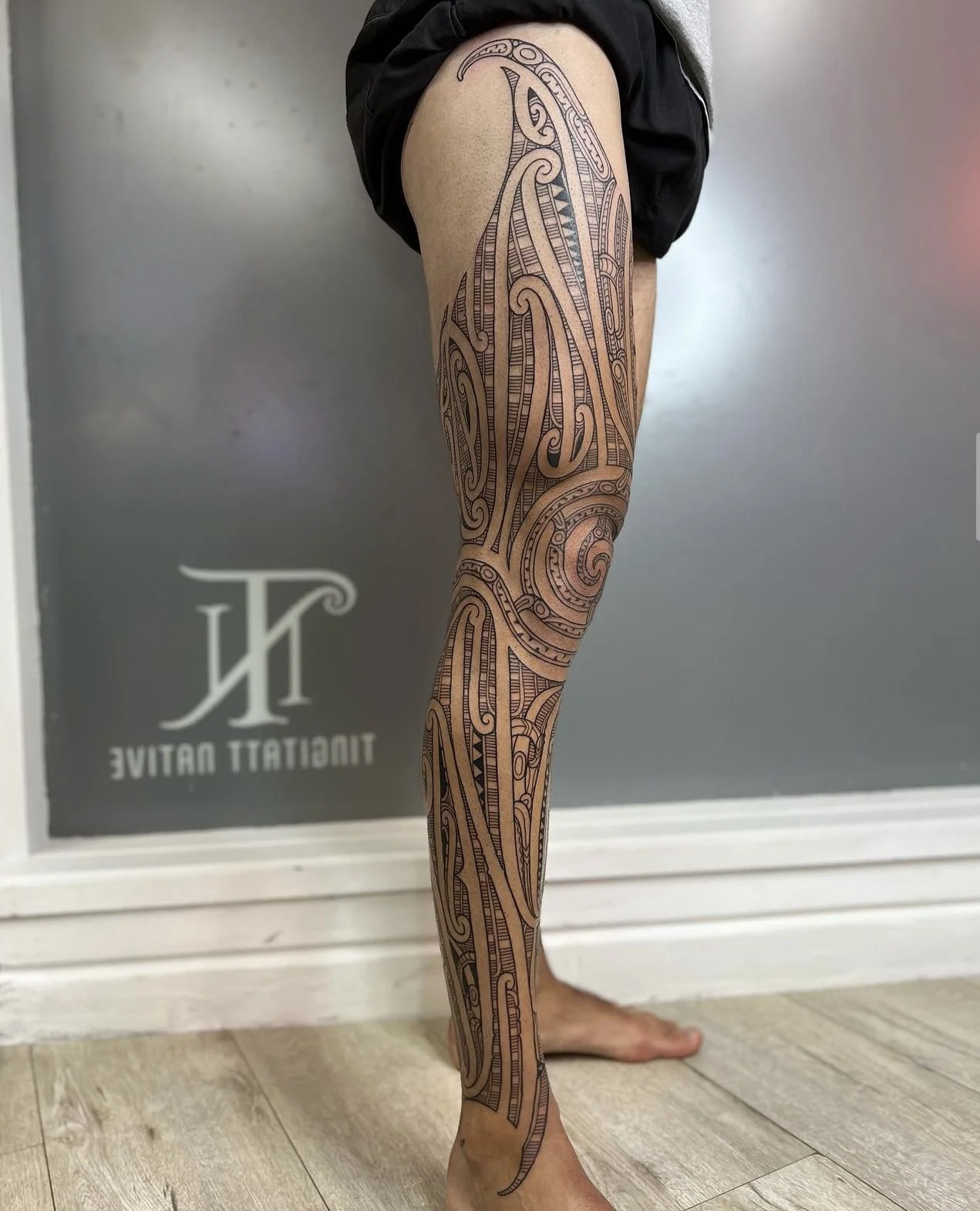
Done by Fern Ngatai
What is the Difference between Ta Moko and Kirituhi?
Ta Moko is seen by some as being a practice reserved for Maori only. After the revival of Maori tattooing there was more interest in the art form by Non-Maori and the term 'Kirituhi' was coined by Ta Moko artists. Kirituhi translates to 'skin art' and was a way of allowing non-Maori to wear traditional Maori patterns without the issue of cultural appropriation. Many artists still use the term Kirituhi when tattooing non-Maori recipients. Kirituhi, however has allowed non-Maori tattooers all over the world to imitate traditional Maori tattooing, using the label Kirituhi so as not to cause offence. Some Ta Moko artists maintain that traditional Maori Tattooing, whether done on Maori or non-Maori is Ta Moko. This way the art form holds its Mana or power and validity. It is up to the recipient of Ta Moko to uphold the Mana of the patterns they wear.
Each Ta Moko artist will have their own view on the Ta Moko/Kirituhi debate and practice each or both at their discretion.
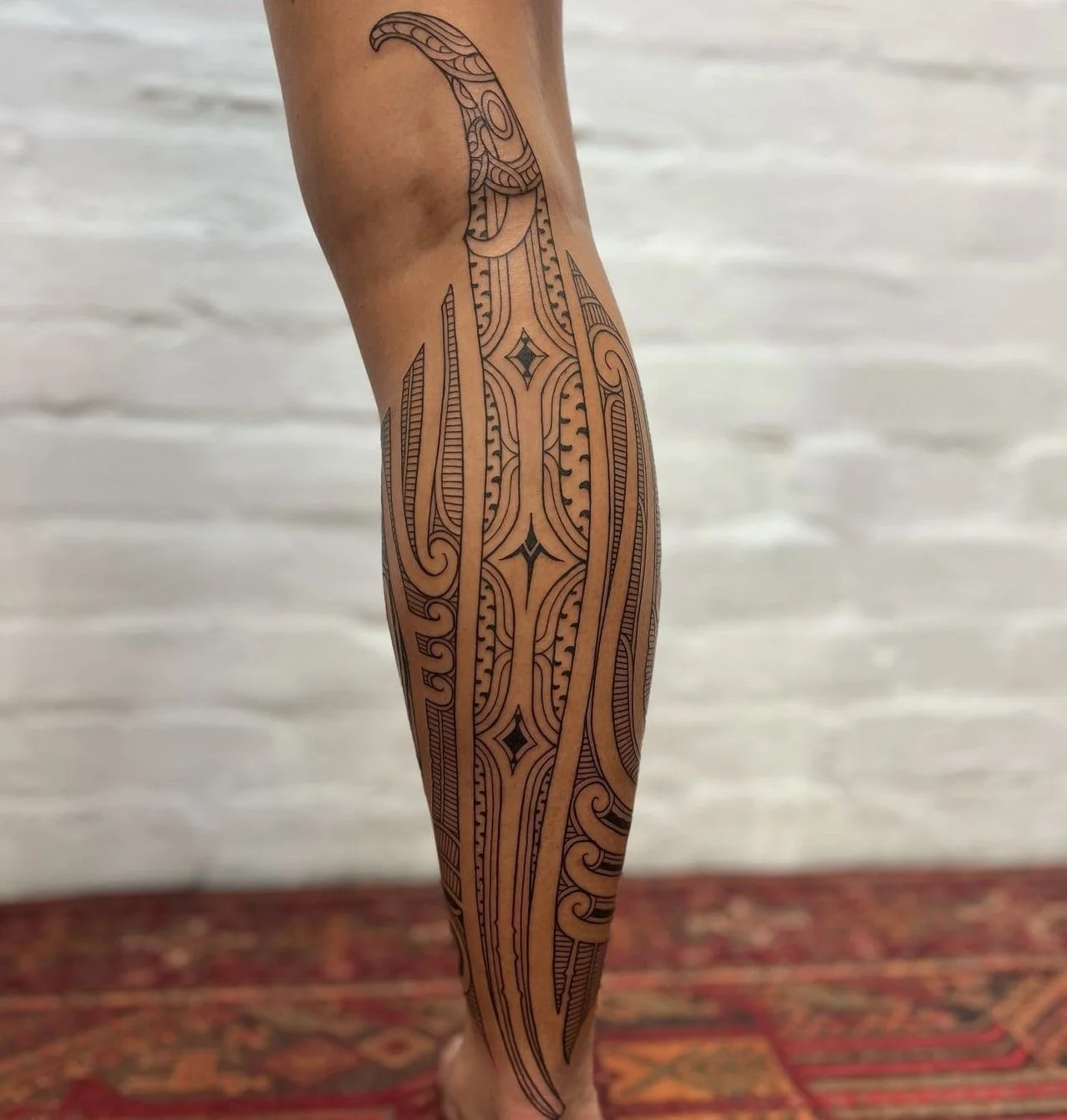
Done by Fern Ngatai
Ta Moko Procedure
Ta Moko begins with a conversation between the artist and recipient. In this conversation, the meaning of the Moko will be decided, this might include using certain patterns to represent Whakapapa (genealogy) Family, Ancestors and tribal connections. The artist will then sterilise the skin being tattooed and begin drawing the design on. This is usually done with a number of pens to refine the design before it is tattooed.
Some Moko artists will recite a Karakia (prayer) to bless the work about to be done. This practice varies from artist to artist, it is not essential in every situation, usually less so in a tattoo shop. If Moko is being done under traditional protocol on a Marae (meeting house) a Kaumatua (elder) will usually open the ceremony with a Karakia and family members will continue with chants and song as the Moko is being applied.
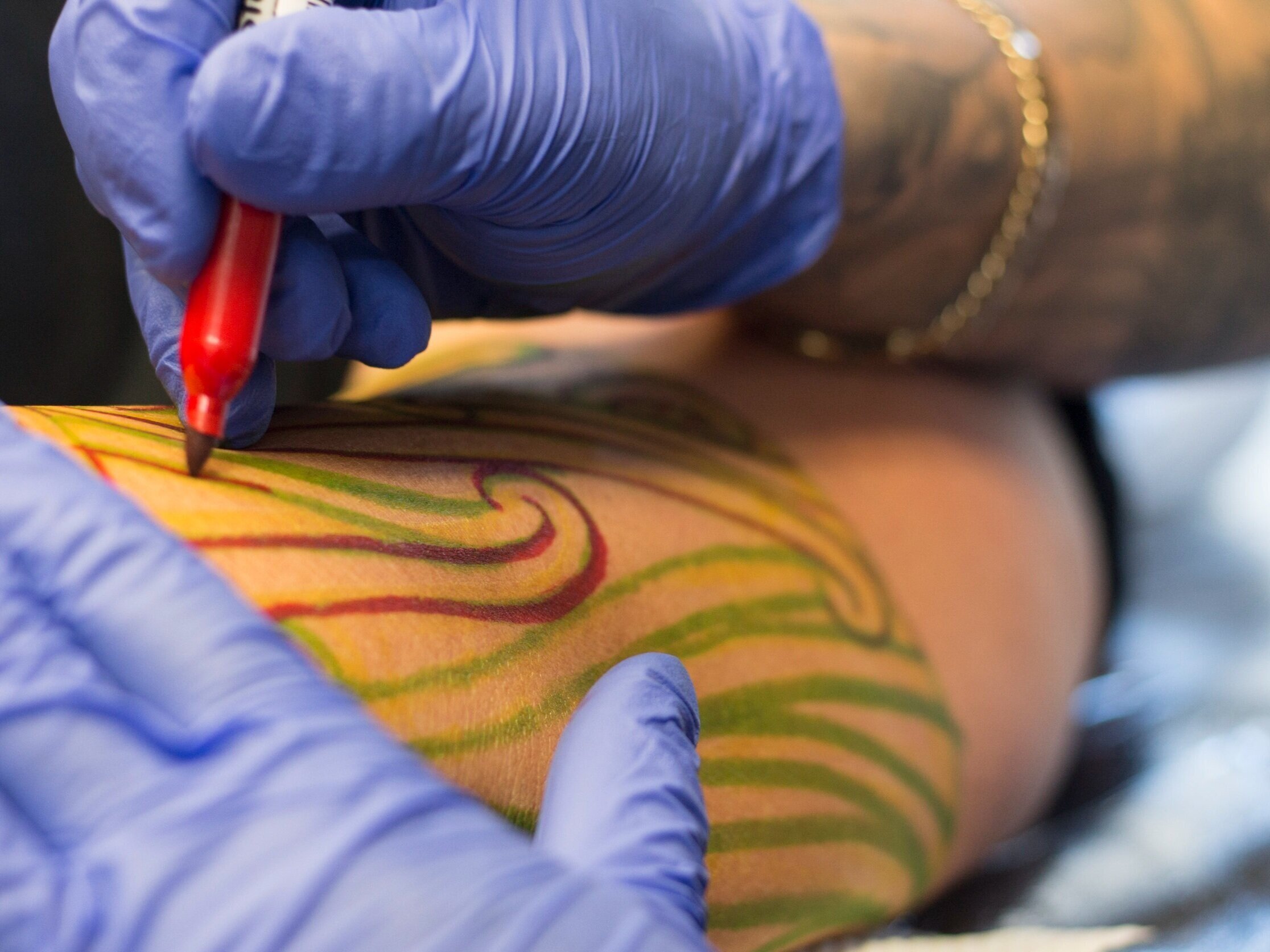
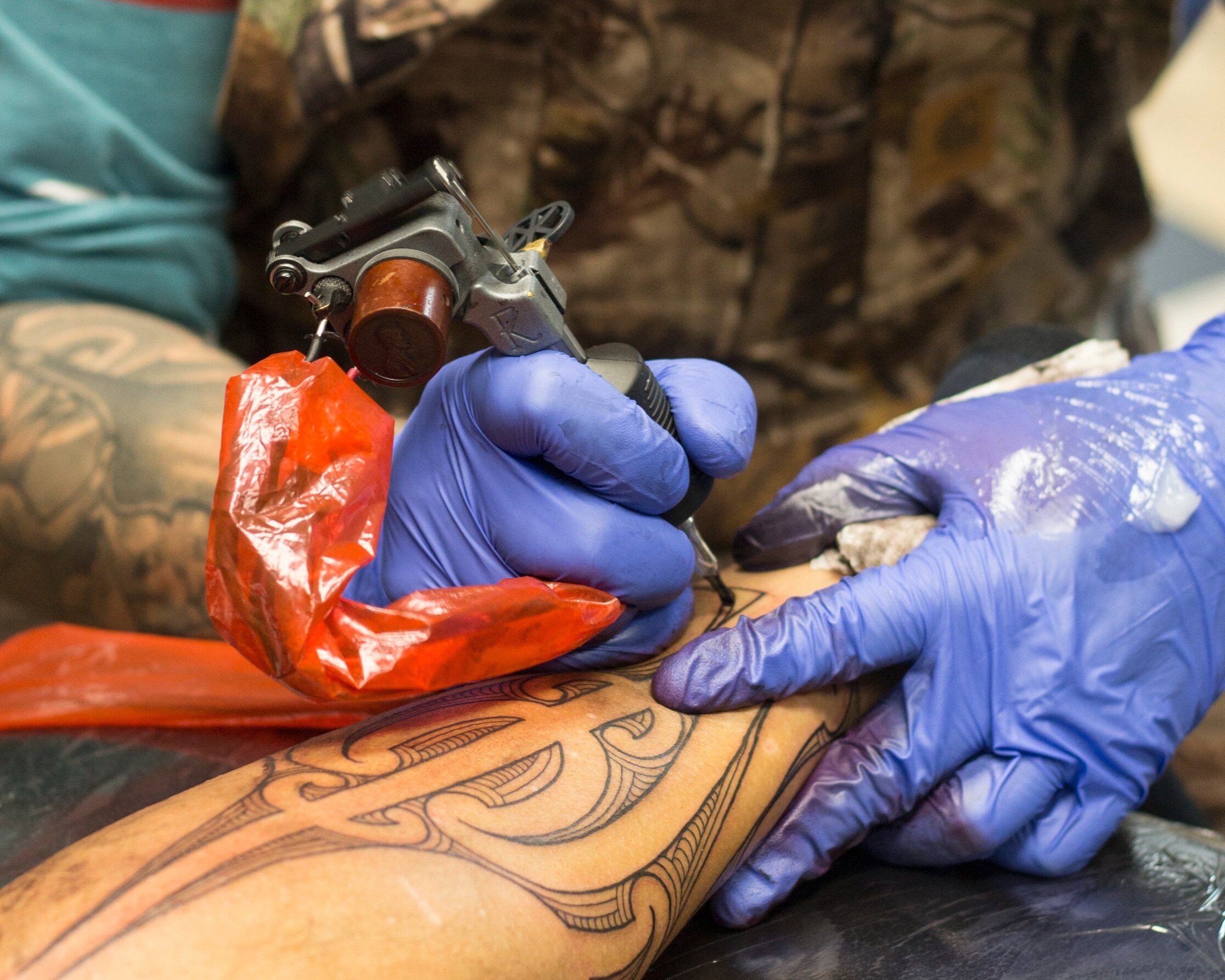
A conversation with Whitu about contemporary Ta Moko
Sunset Tattoo - Can you tell us abit about your backround in tattooing and your whakapapa?
Whitu - My whakapapa descends from the ancestral waka Ngātokimatawhaorua, Mātātua, Māmari, Tinana, Tokomaru, Tainui, Whenuaroa, Te Arawa and Takitimu.
I come from a heavily culturally-influenced background, nurtured not only through oral language but also through visual language; understanding the visual perspective of our ancestors and our people, now expressed through modern tools and machines.
Māori schooling and kapa haka, growing up with a more contemporary understanding of tikanga and kawa, were all big influences on my wanting to learn how to tattoo moko. Growing up alongside friends who were also nurtured in te ao Māori fuelled that passion further.
I did my first moko/tattoo under the guidance of a whakairo (traditional Māori wood carving) teacher in my later years at school. During that time I had the privilege of learning the knowledge of whakairo and understanding pattern through a distant lens, looking back to the past to grasp the base knowledge of traditional Māori carving: the forms, motifs and detailing infills, and the way patterns are drawn from the natural world, using symbols from animals, nature and the environment.
After school, I studied further in the art of whakairo to deepen my understanding of these patterns and to wānanga with other like-minded artists. I've since carried that knowledge across from carving wood to tattooing skin.
Sunset Tattoo - What does Moko represent for the wearers today?
Whitu - For the kaiwhiwhi (wearer), the true essence of tā moko is a way to inscribe markings and symbols that represent whakapapa (genealogy), as well as a representation of status and rank within one's community and craft. We use infill details significant to the kaiwhiwhi's iwi, and use those details to describe their nature, skills and attributes, while also making that connection between the kaiwhiwhi and the taiao (environment).
With the change and development of the tattooing world, we've evolved moko in a way where we can inscribe pūrākau (tribal stories), not to remember, but to reflect and acknowledge.
We also use Kowhaiwhai symbols to describe the wearers journey in life, the beginning of a new journey, the journey itself and the end. Acknowledging the journey as a whole.
With the popularity of taa Moko in this modern age, this is another way to describe a form of Moko catered to all nationalities known as Kirituhi.
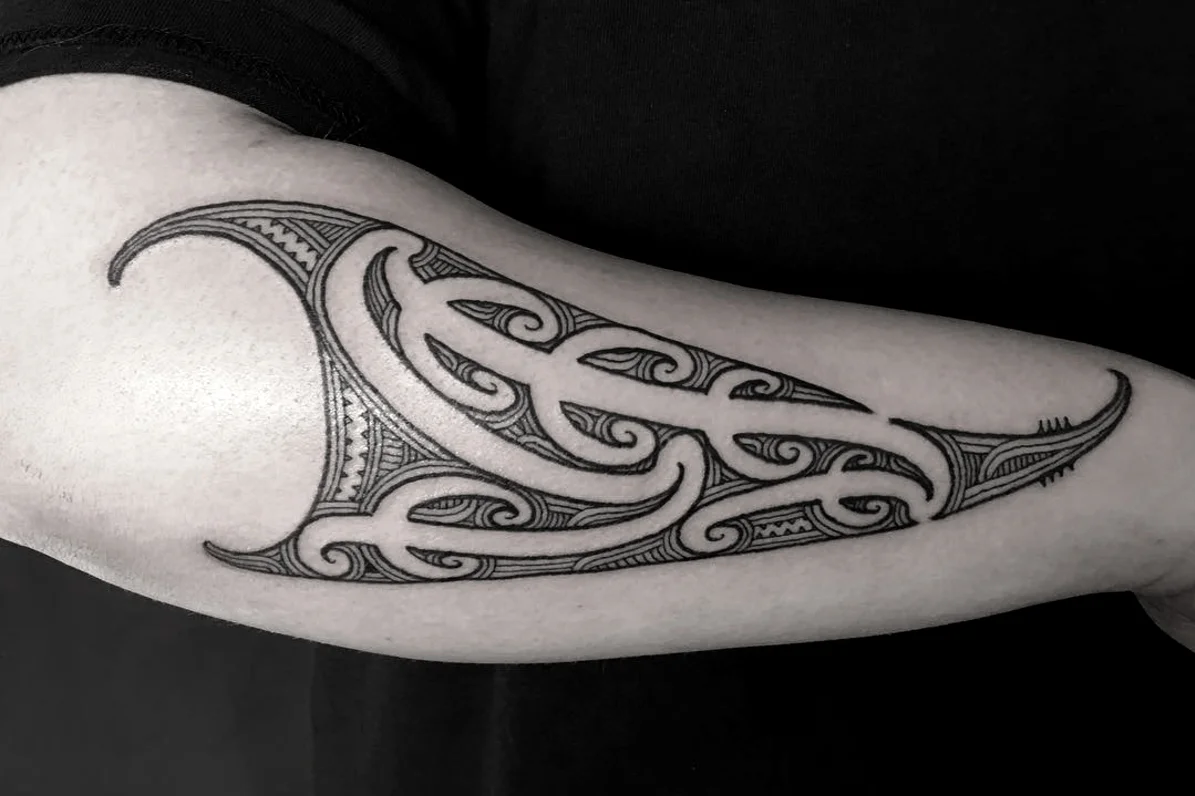
Done by Thomas Clark

Done by Thomas Clark
Sunset Tattoo - What’s the difference between Tā Moko and kirituhi, and how do you approach that distinction in your own mahi? And is it cultural appropriation for non Māori to receive Moko?
Whitu - In terms of Māori history, culture and more specifically genealogy and ancestry, tā moko must be approached respectfully, whether by Māori or non Māori. To the Māori people, it represents not only the culture, but honours your ancestors, never acknowledging self, but the make up of one's self. To be Māori is to understand te ao Māori, immersing yourself into te ao Māori.
It comes down to the wearer's intentions. In some cases there are exceptions, those being non Māori with Māori kids, non Māori adopted into a Māori whānau, non Māori with a strong Māori upbringing, and those who have spent time in wānanga to understand the inner workings of our culture through tikanga and kawa (protocol).
Only three moko are specifically reserved for Māori, those being the mataora, the moko kauae and the pūhoro.
Each tā moko artist is the same in most ways, but also different in smaller ways. My personal take on cultural appropriation is that it heavily depends on the kaitā (tattoo artist) you choose and your approach to the request. I personally have done kirituhi on non Māori, with the proper exceptions in place.
Sunset Tattoo - What do you want someone to think about before they come to you asking for Moko?
Whitu - A clear understanding of what they are wanting. You don't have to centre your whole idea on tikanga and kawa, you will be given parts where you, the individual kaiwhiwhi, can add your own unique or significant symbol. If you are Māori, the main things we ask for are your pepeha, whakapapa, and a small whakamaramatanga (description/explanation).
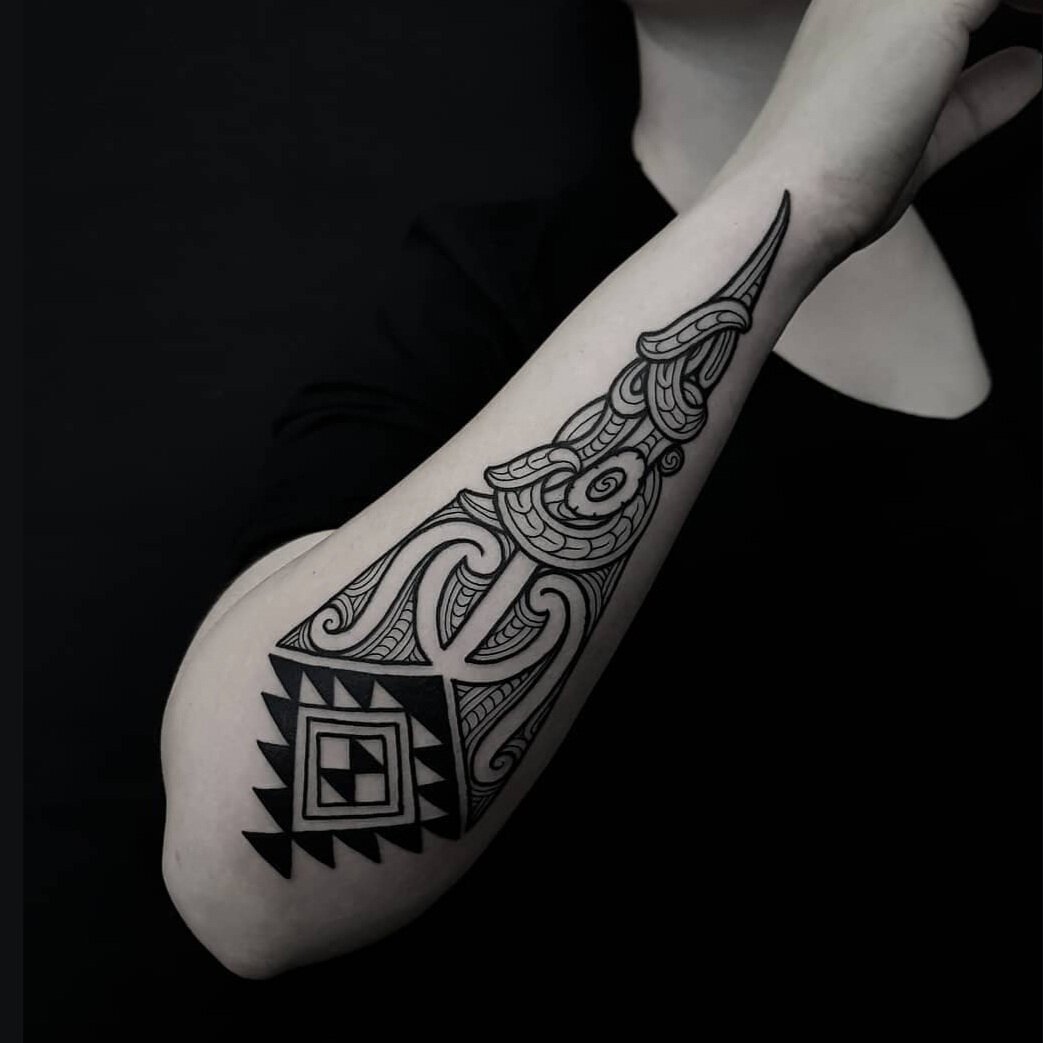
Done by Tristan Marler
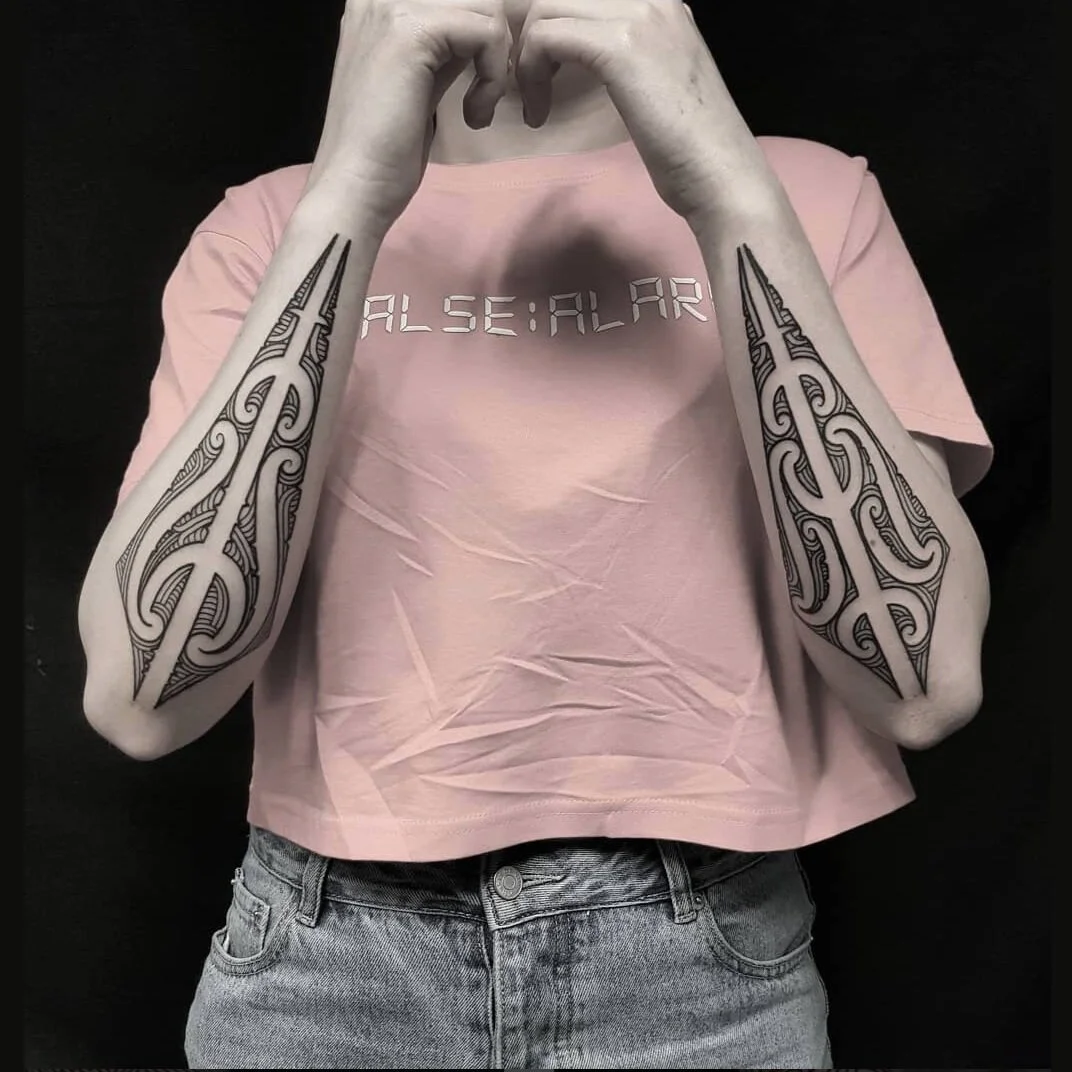
Done by Tristan Marler