BLOG
Orochimaru Back Piece by Horiyama
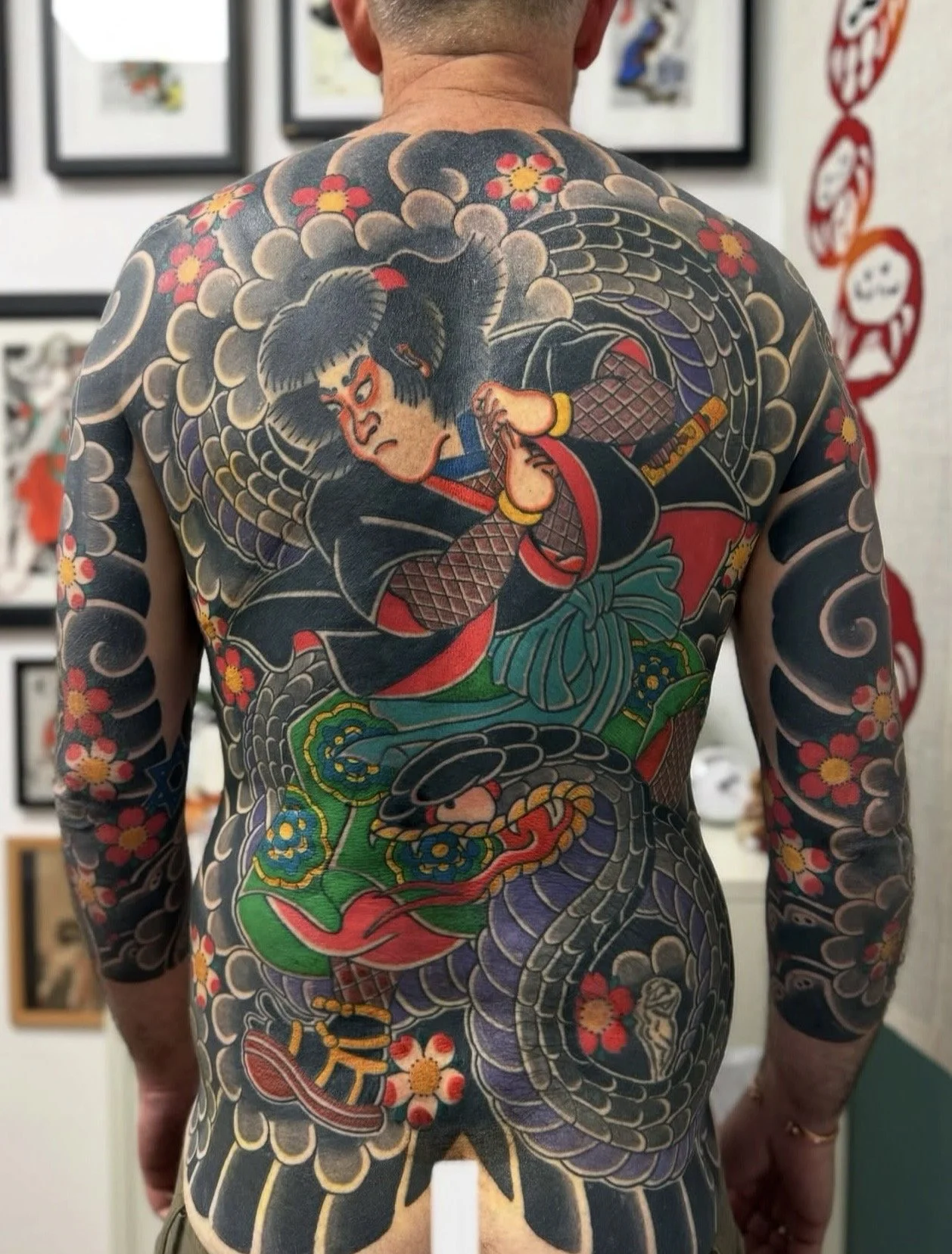
This striking full-back tattoo by Horiyama depicts Orochimaru, the legendary serpent sorcerer from Jiraiya Gōketsu Monogatari (The Tale of the Gallant Jiraiya).
While Orochimaru is now widely recognised as a character from Naruto, the story behind him dates back much further. Jiraiya Gōketsu Monogatari became popular during the Edo period, with the story appearing in illustrated books and later being adapted for kabuki theatre and ukiyo-e. The story centres around the battle between Jiraiya, who possesses frog magic, and his enemy Orochimaru, who uses serpent magic.
Orochimaru, whose name incorporates orochi, meaning a large serpent, is portrayed as a powerful and dangerous antagonist. His serpent magic forms one part of a supernatural relationship between three characters: Jiraiya and his frog magic, Orochimaru and his snake magic, and Tsunade and her slug magic.
The story became particularly popular in 19th-century Japanese art. Artists such as Utagawa Kuniyoshi depicted Jiraiya and Orochimaru in dramatic ukiyo-e scenes, including battles between Jiraiya riding a giant toad and Orochimaru with his serpent powers.
Horiyama's tattoo brings this historical imagery into a modern irezumi composition. Orochimaru dominates the upper back while the large serpent coils through the lower portion, surrounded by clouds, flowers and traditional Japanese background work. The vibrant colours and flowing composition allow the imagery to follow the natural shape of the body while keeping the focus firmly on the legendary serpent figure.
Sunset Tattoo is the home of some of New Zealand’s most celebrated tattooists, and located on Karangahape Road (K Road). We specialise in timeless, professional tattoo styles such as Japanese, American/western traditional, fine line and black work. With a friendly team, a gorgeous studio and decades of knowledge we would love to help you with your next tattoo project. For more information, get in touch with us. Contact: info@sunsettattoo.co.nz / www.sunsettattoo.co.nz
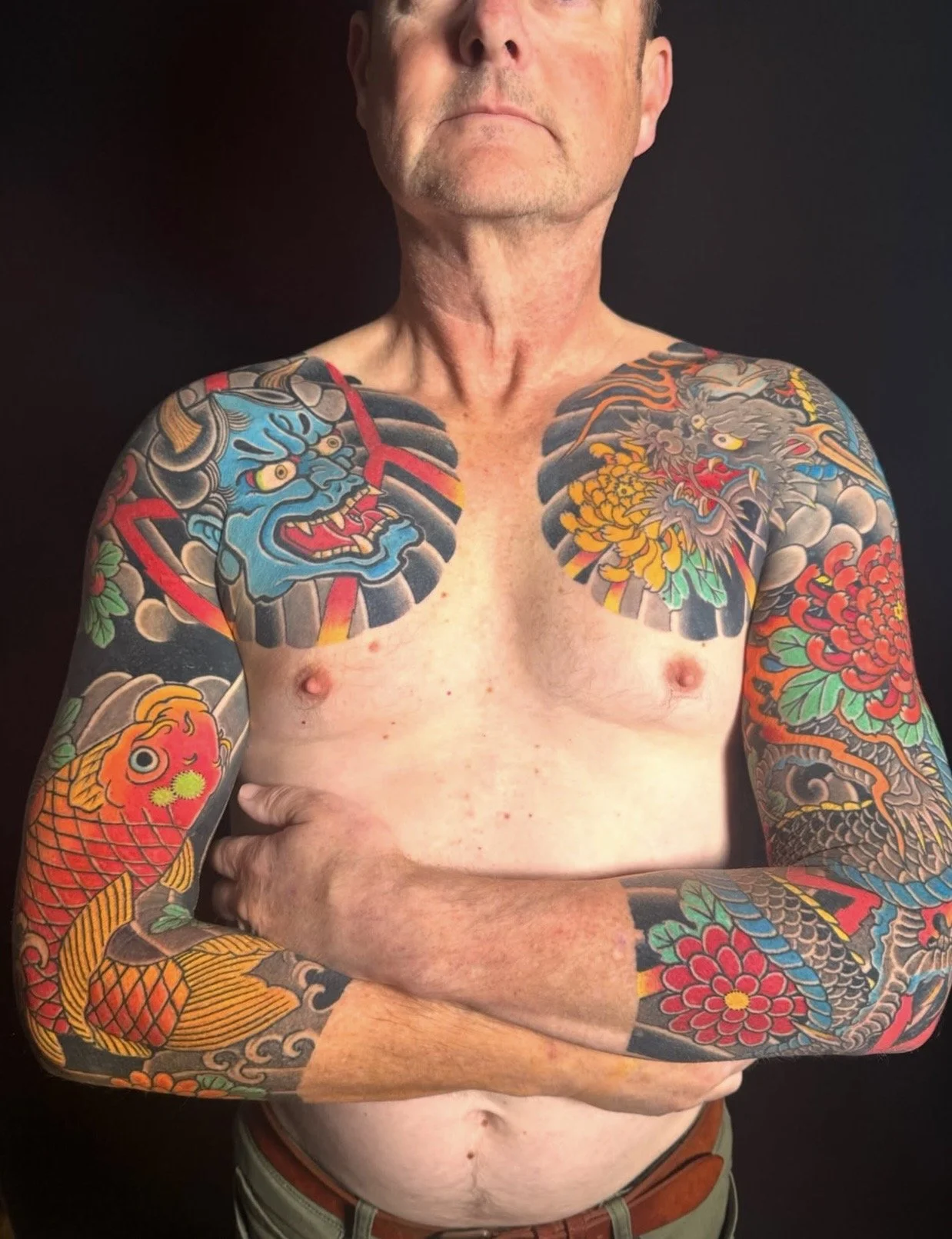
Healed Arm Sleeves by TomTom
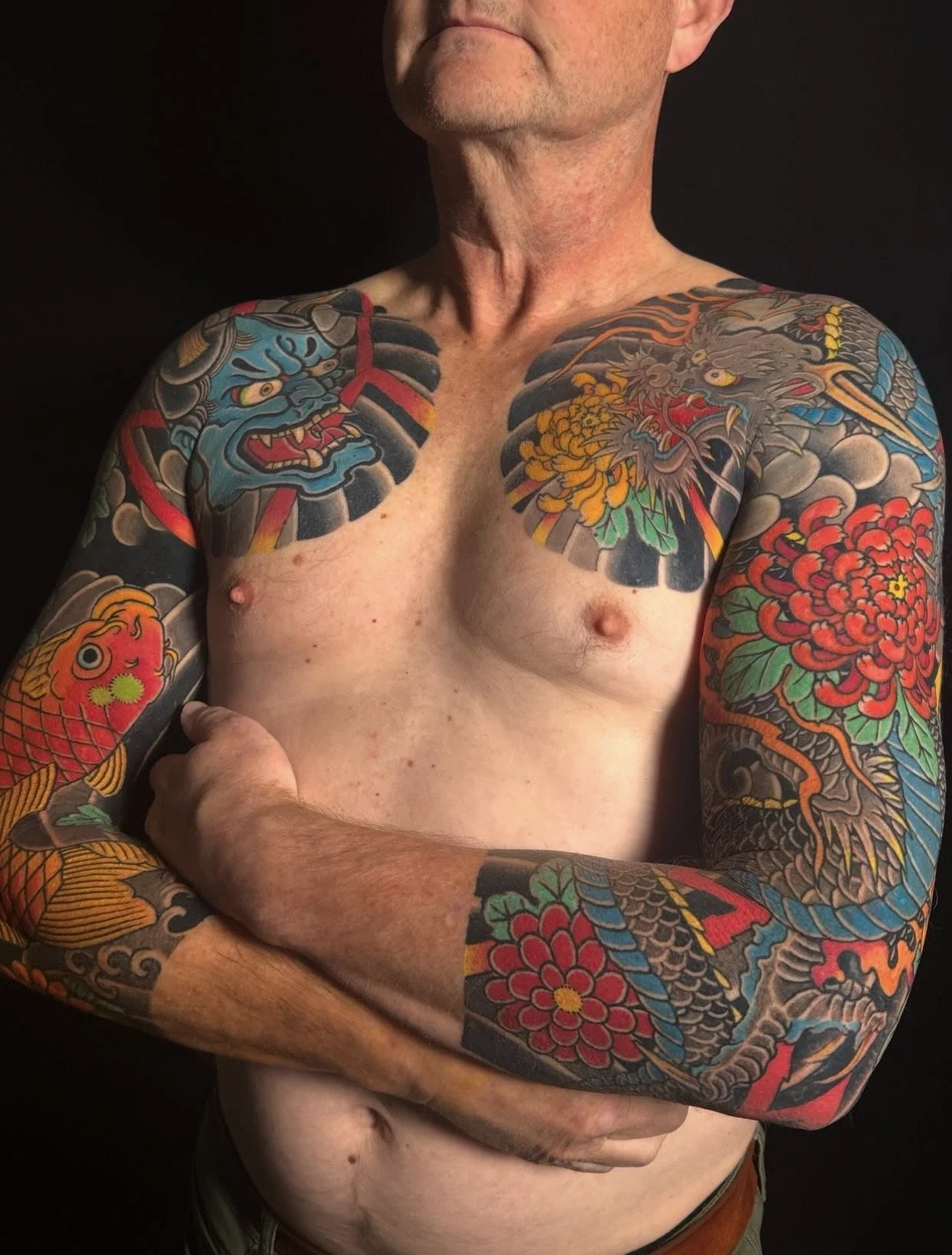
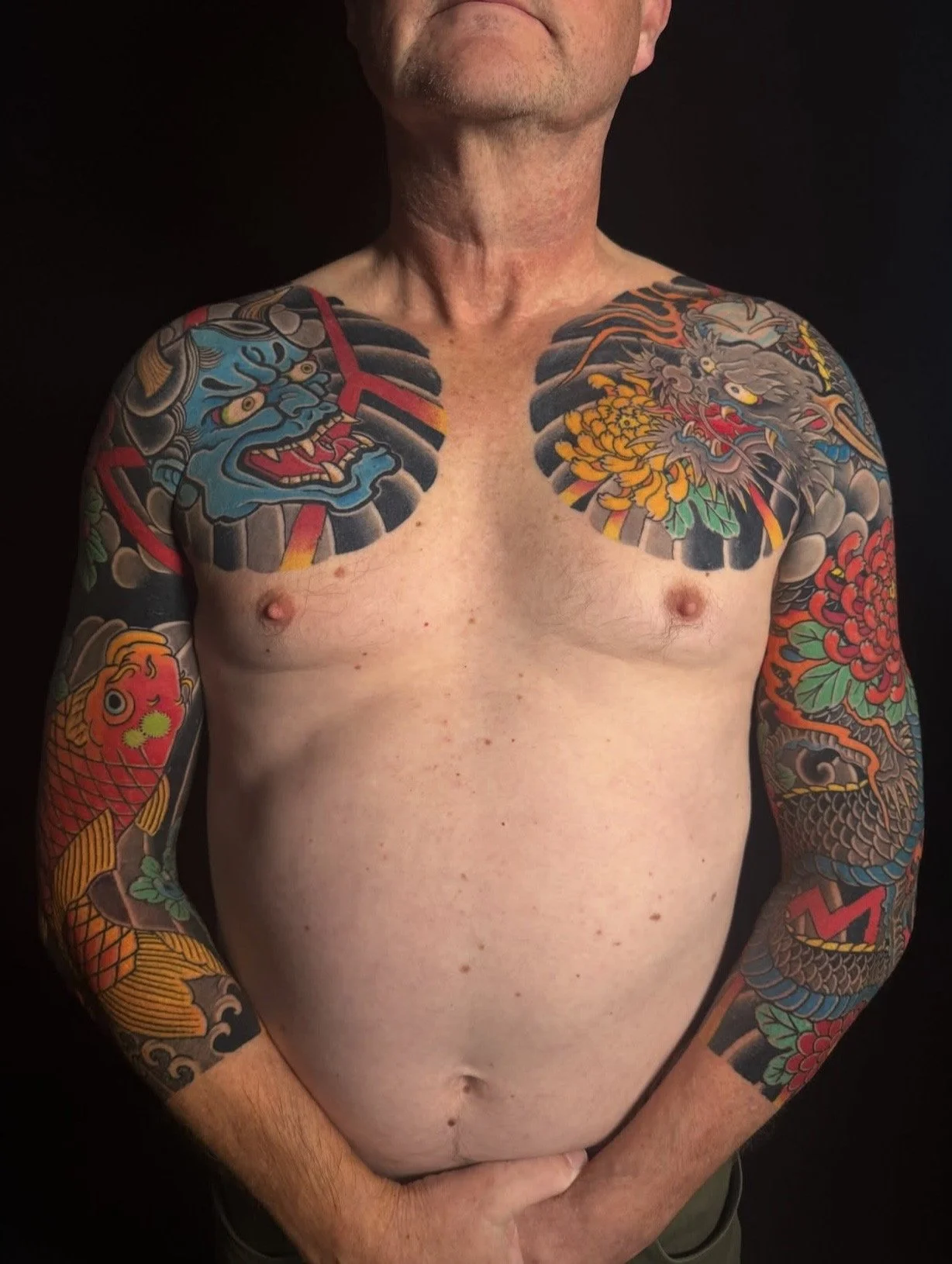
There's nothing quite like seeing a big piece once it's fully healed. These two sleeves have had time to settle, and the colour and line work are sitting exactly where we want them to.
On the left arm, a Hannya mask sits across the chest and shoulder, with a koi swimming down to the wrist. The Hannya comes from Noh theatre , a mask representing a woman transformed by grief and jealousy into a demon, and one of the most iconic images in Japanese tattooing. Below her, the koi is a symbol of perseverance, drawn from the legend of a carp that swims upstream against the current until it becomes a dragon. Together, they play off each other nicely: one figure already transformed, one still pushing forward.
On the right arm, a dragon curls from the shoulder down through the bicep, surrounded by chrysanthemums in red and gold. Dragons in Japanese tattooing represent strength and good fortune rather than menace, while the chrysanthemum, or kiku, is tied to longevity and honour. The flowers give the dragon's scales something soft to sit against, which is a lot of what makes traditional Japanese work feel balanced.
Across both arms, the waves, cloud backgrounds and lightning tie everything together so the whole piece reads as one continuous story rather than two separate tattoos.
Thinking about a sleeve of your own? Come chat with us about placement, concept, and how to build something that heals as well as this. Click here to book a consultation.
Tiger by Horiyama
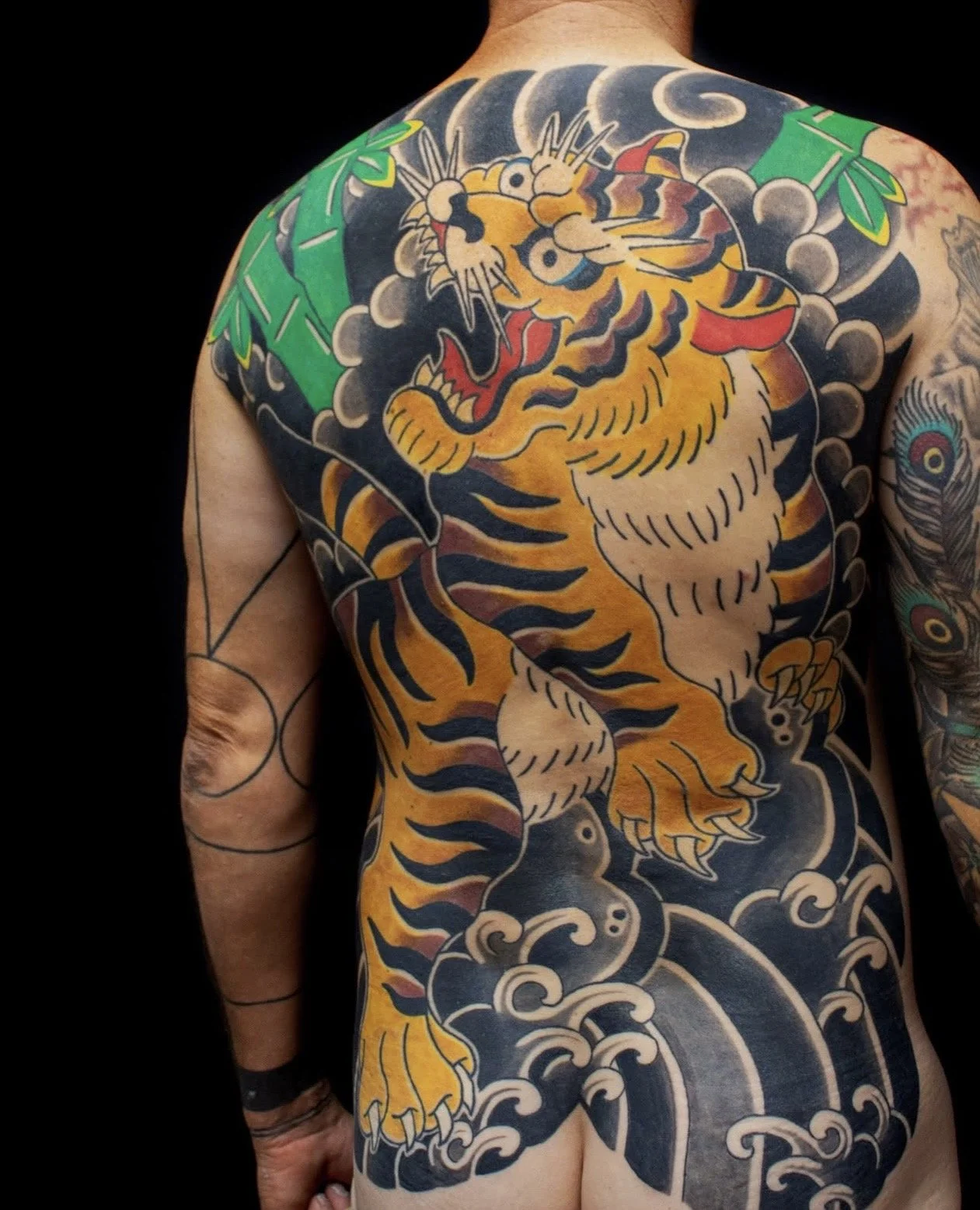
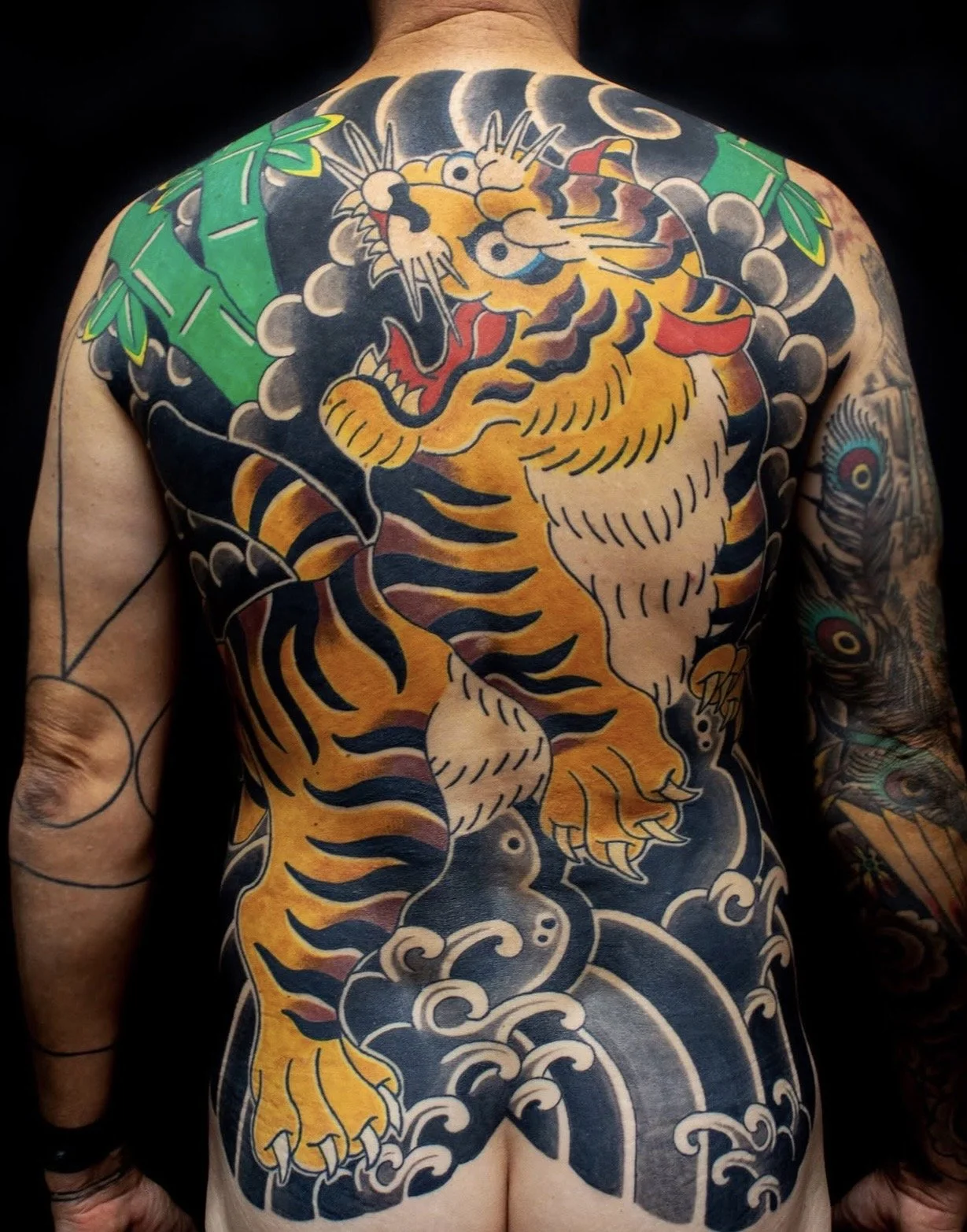
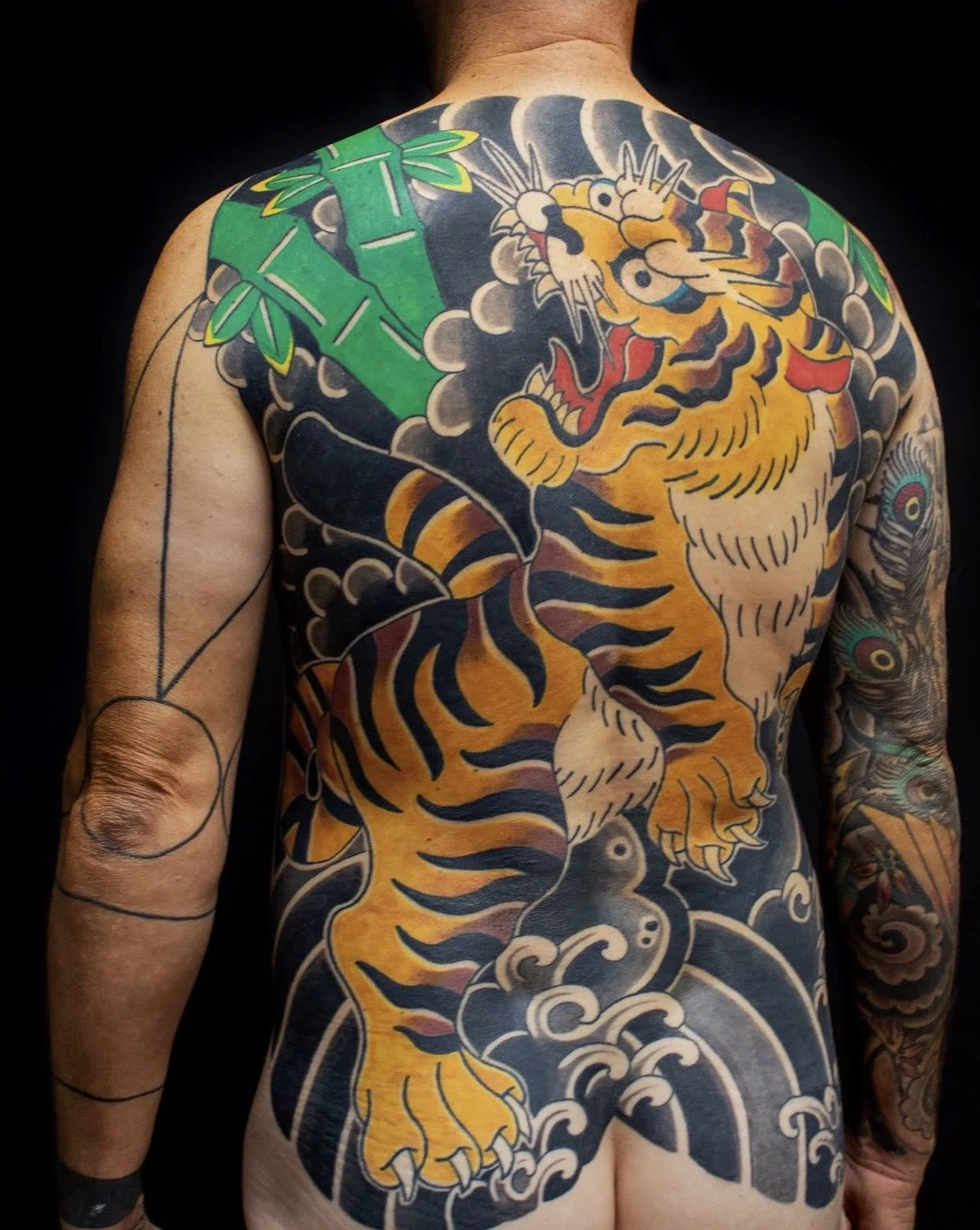
Some pieces don't need much said about them. This full back tiger, completed by Horiyama, is one of them.
The tiger is rendered in the classic Japanese style; mouth open mid-roar, claws extended, moving down through a rolling wave at the base of the spine. Bamboo leaves sit at the shoulders in a sharp green, the one real break from the black, grey and burnt orange that carry the rest of the piece.
The tiger holds its own place in Japanese tattooing, separate from the dragon or the koi, traditionally read as a symbol of courage, and a guardian against illness and bad luck. Tigers were never native to Japan, so early depictions were based on imported paintings rather than life, which is part of why the traditional tiger looks the way it does, exaggerated stripes, wide eyes, a look that's not quite realistic. That stylisation has stuck, and it's what makes a tiger like this instantly readable as Japanese work rather than realism.
If you're considering something on this scale, get in touch and we can talk through what that process looks like.
Welcoming Leo - Our New Resident Artist
We're happy to share that Leo Olmos is joining Sunset Tattoo as a resident artist.
Leo guested with us earlier this year, and it's safe to say the response spoke for itself. We're glad to have him back, this time for good.
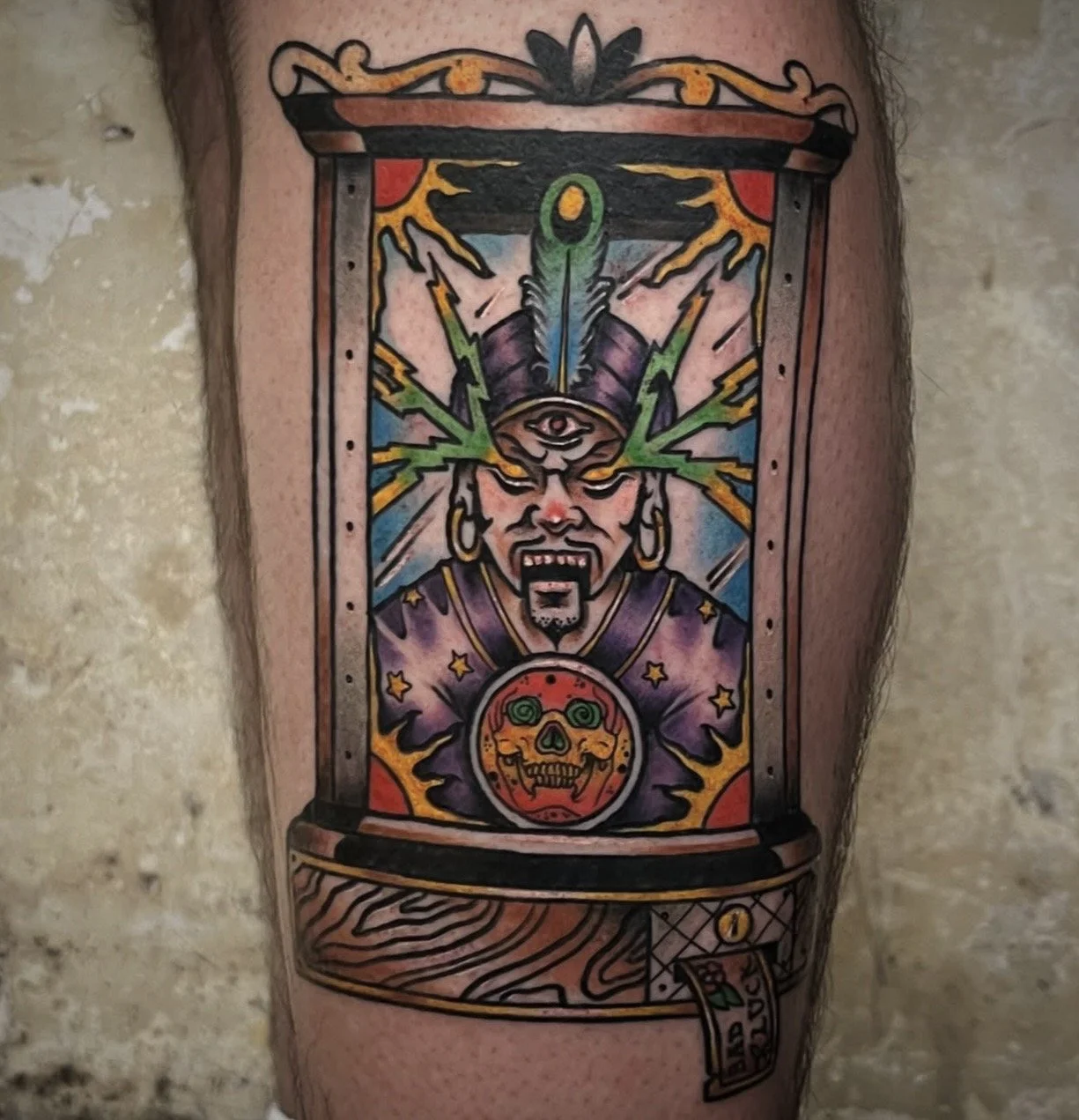
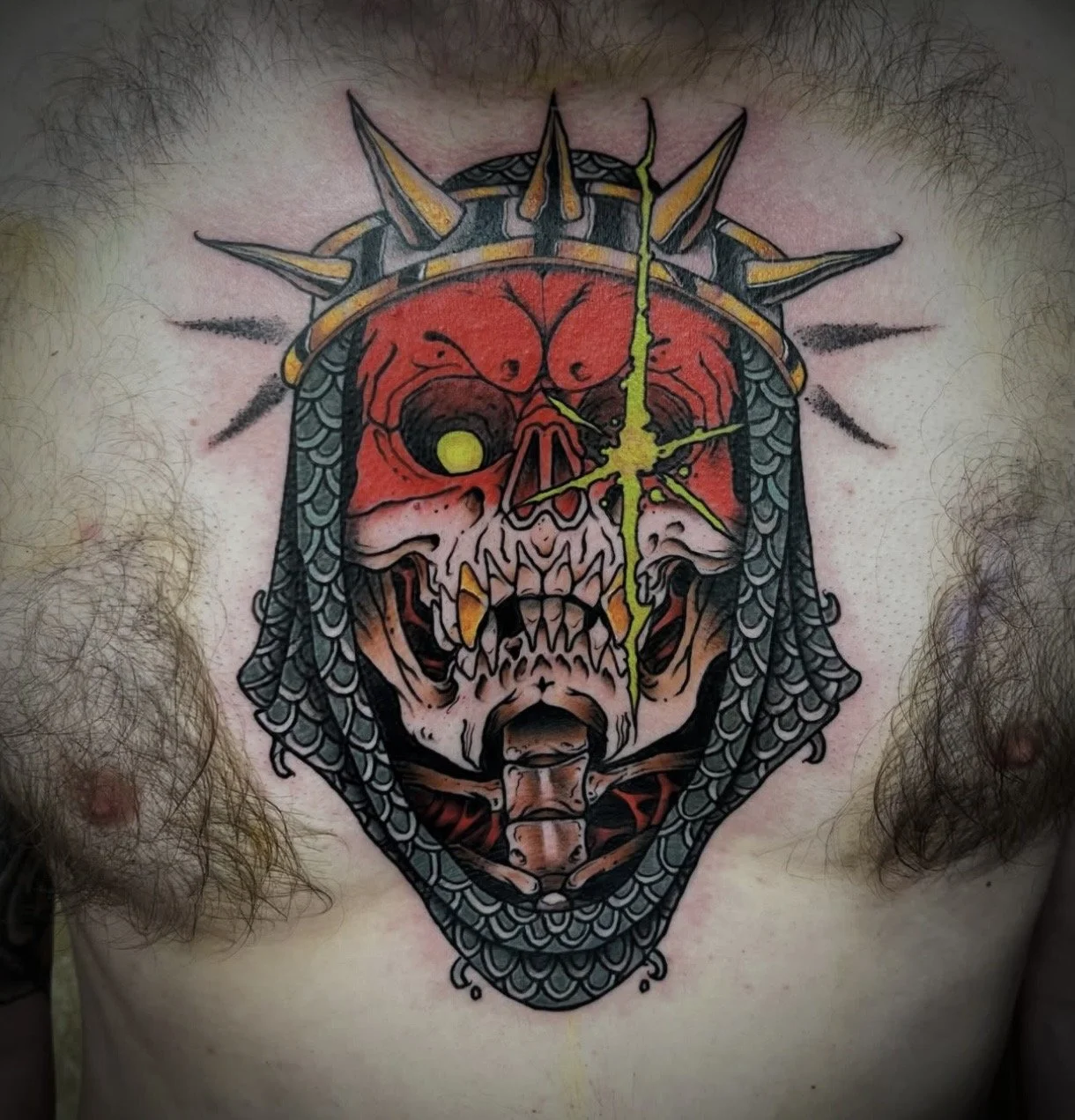
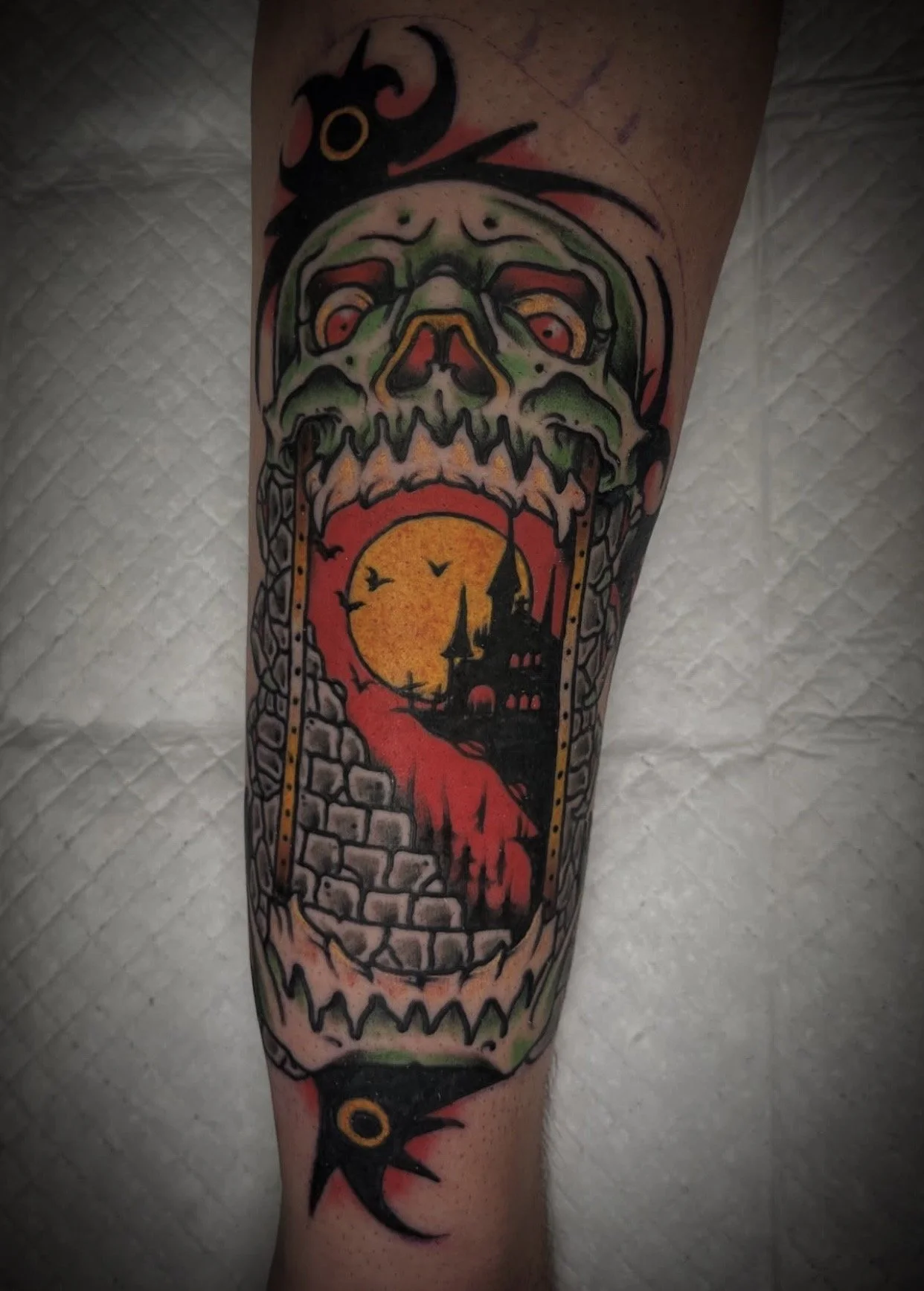
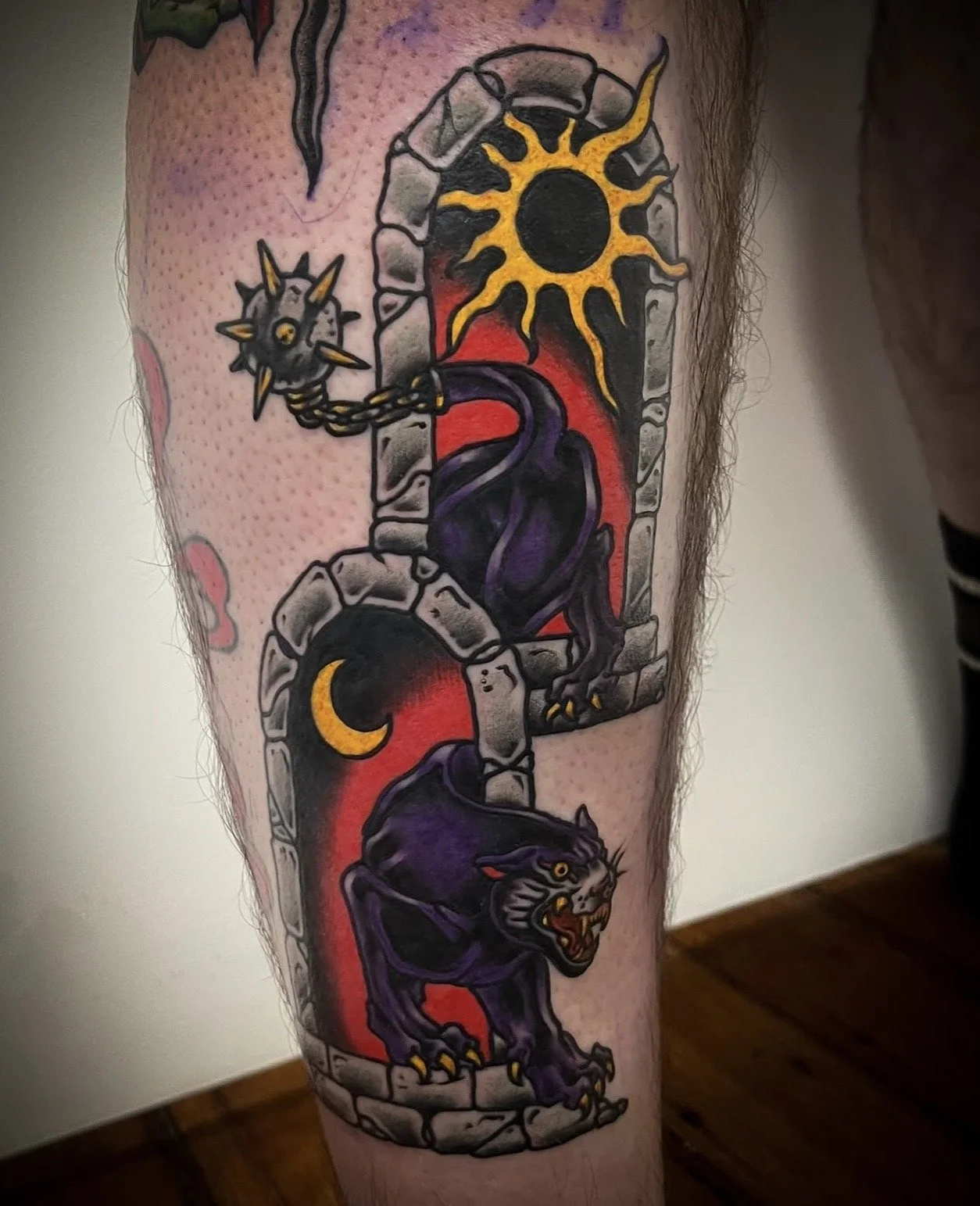
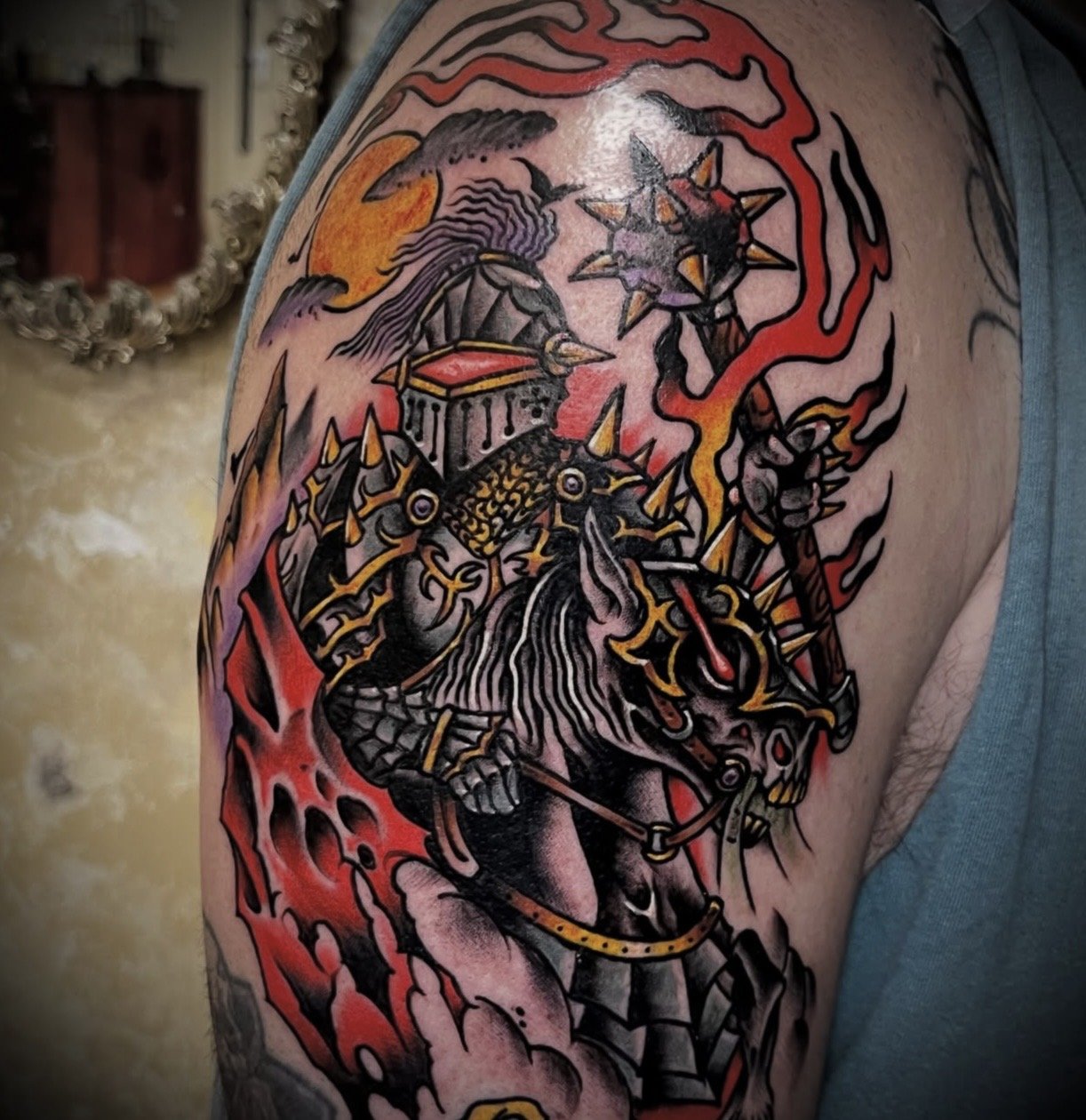
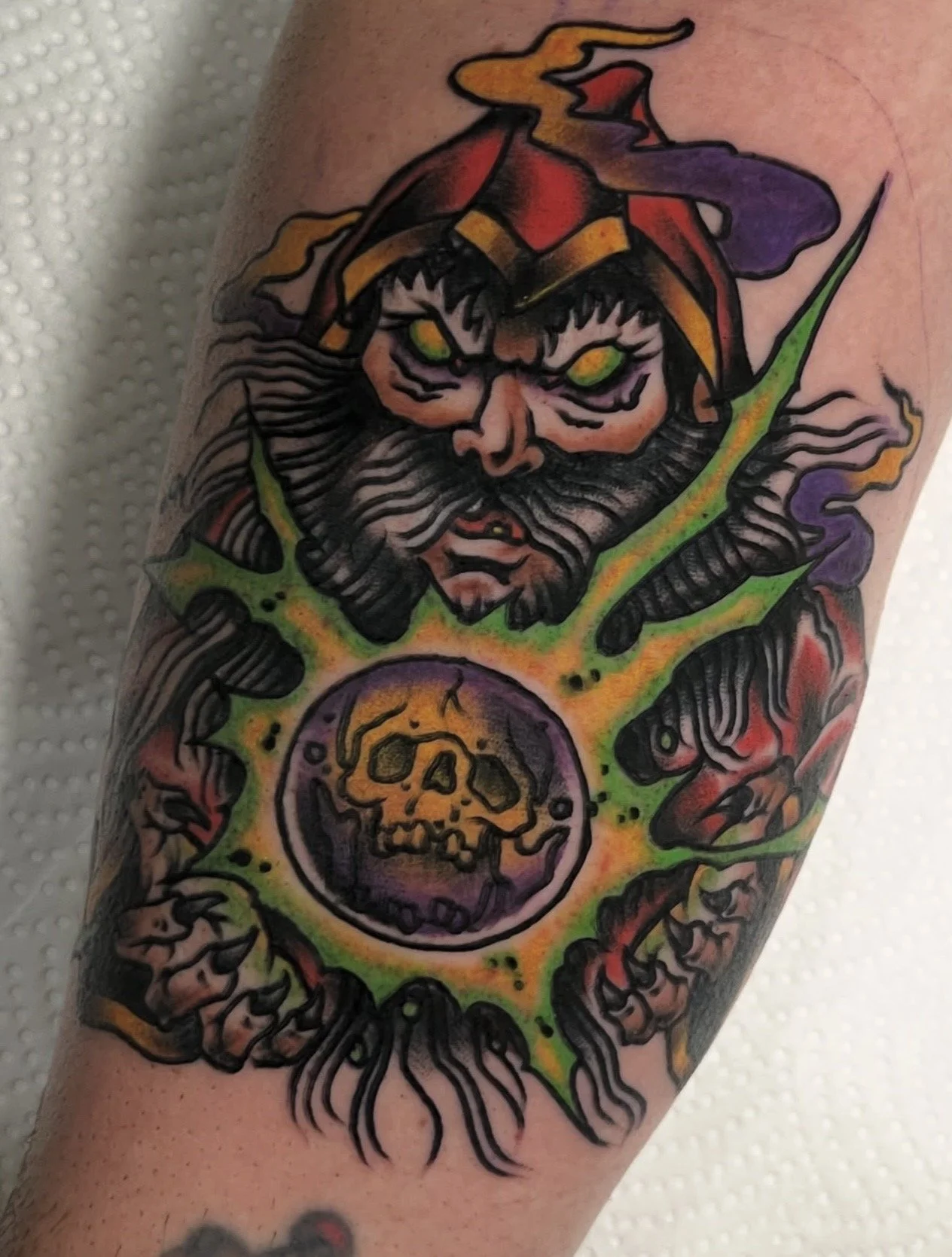
Born and raised in Chile, Leo has spent the past seven years tattooing in Perth, Australia, building a strong reputation in traditional and neo-traditional work. His style covers a lot of ground; pop culture, gaming, dark fantasy, animals, movies, western themes, and everything in between. Always delivered with bold, timeless line work.
Whether you're after something meaningful or just a cool tattoo for a cool person, Leo's approach is all about bringing your ideas to life properly.
Come say hi, browse his portfolio, or book in for your next piece. Leo is now taking bookings at Sunset Tattoo.
Tiger by TomTom
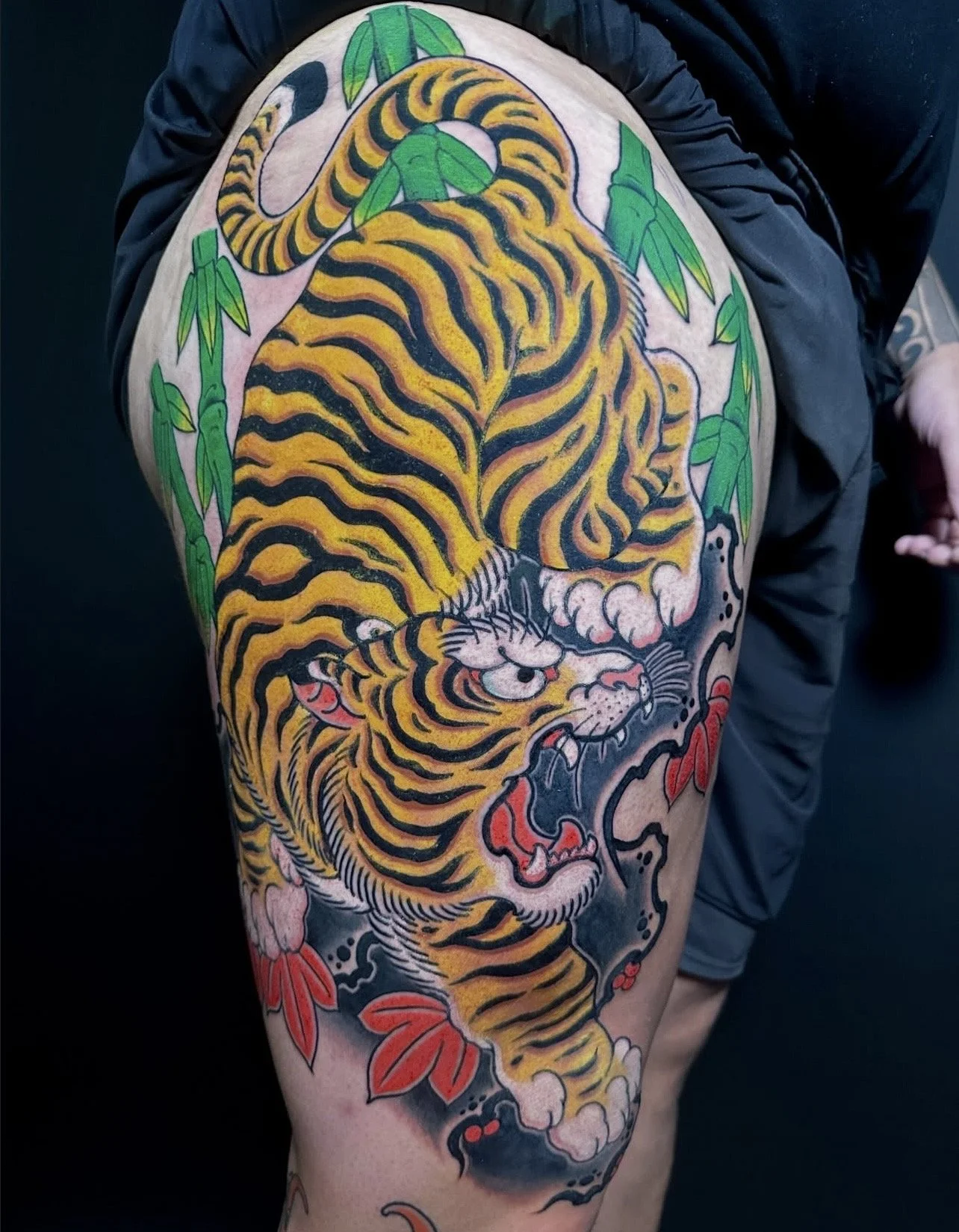
A big Japanese tiger by TomTom, covering the whole thigh, teeth bared mid-turn, bamboo and maple leaves worked in around it to fill out the panel.
Tigers have long stood for courage and protection in Japanese tattooing, traditionally worn as a guard against bad luck and evil spirits. It's a subject with real weight behind it, which makes it a natural fit for a piece built to take up serious space.
Going big doesn't have to mean a full leg. The thigh alone gives plenty of room to work with, enough for real scale, detail, and background without locking into a hip-to-ankle commitment straight away. This piece was planned with that in mind too, so if Bernie wants to extend further down the leg down the track, the composition's set up to carry on naturally rather than needing to be reworked around.
Tattooed over two back-to-back days, it's got the density and boldness that Japanese-style work is built on, solid black, strong colour, and a layout that fills the space without overcrowding it.
Thinking about a large piece but not ready to go full sleeve or leg? Come in and talk to us, we can design something that looks complete now and leaves room to build on later.