BLOG
INTRODUCING LOTUS CARTRIDGES
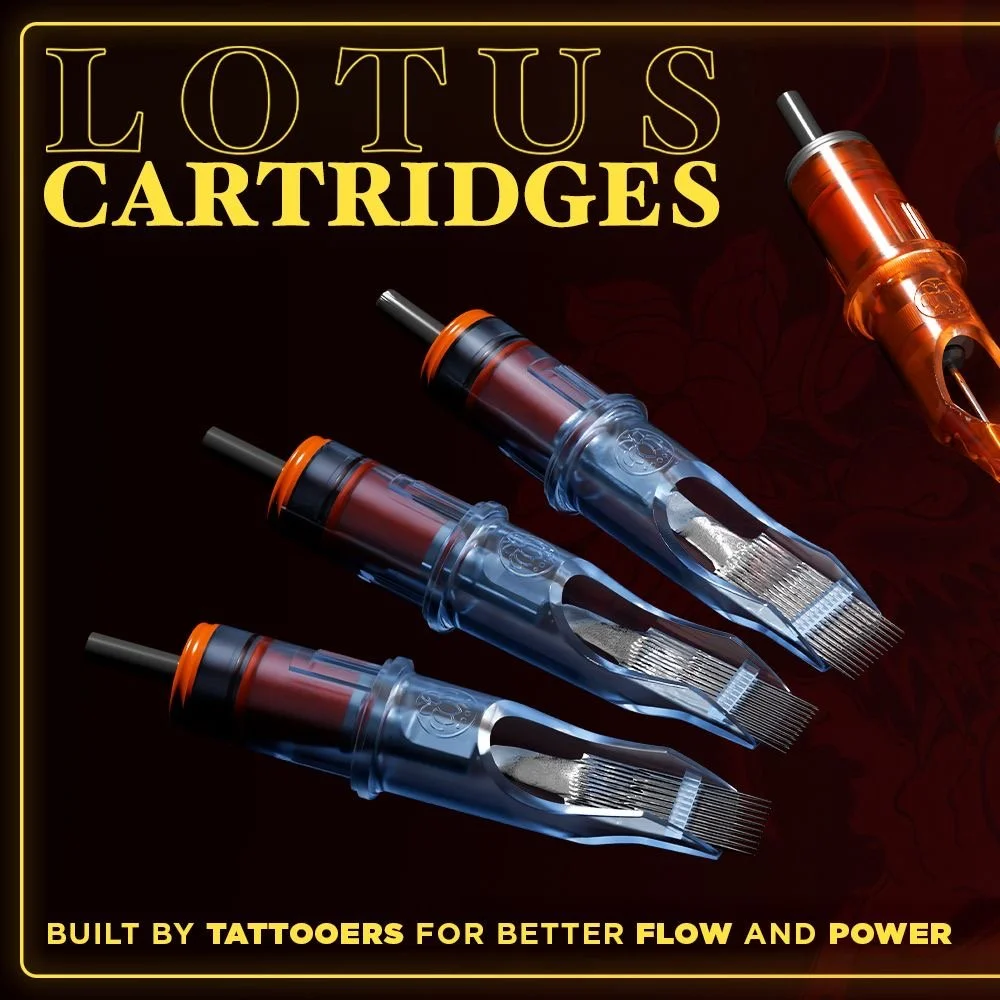
We're thrilled to announce that after years of testing, Lotus Cartridges have finally arrived!
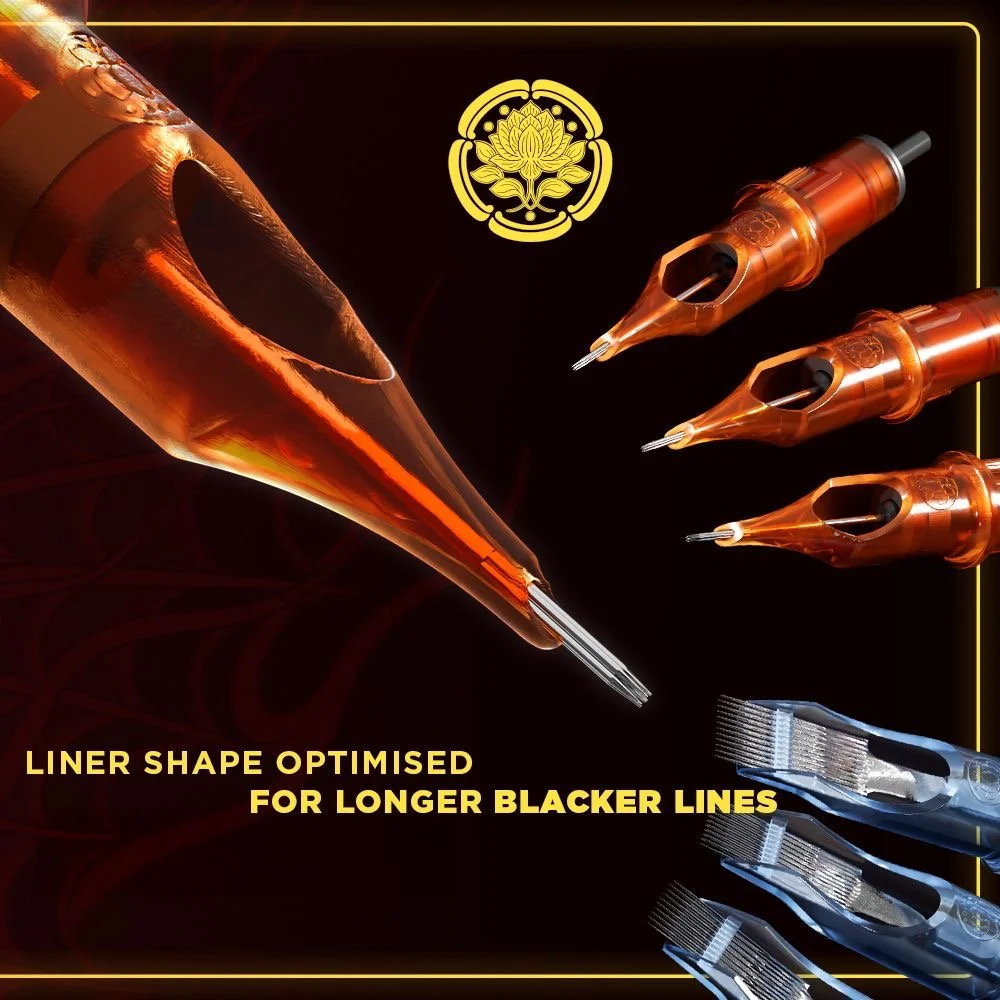
Lotus Cartridges are built to meet the highest standards in tattooing—designed by Sunset Tattoo’s owner TomTom and Ryan Ussher from Lighthouse Tattoo in Sydney, with input from a global network of working tattooers. These cartridges are made for experienced hands that value quality, precision, and the feel of real tattooing. Stripped back to what matters most, we’ve eliminated the gimmicks and focused entirely on performance: clean ink flow, perfect tension, and the durability you need day in and day out. With reinforced back stems, 316L Japanese steel, a 99.5% needle perfection rate, and years of real-world testing behind them, Lotus Cartridges deliver the boldest colour, the sharpest lines, and the smoothest shading—with a feel that’s as satisfying as a bar needle.

Suminagashi Inspired Arm Sleeves with Peonies by TomTom
These black and grey full arm sleeves stay true to the foundation of traditional Japanese tattooing—strong composition, symbolic motifs, and balanced negative space. Peonies sit confidently in key positions across both arms, shaded with depth and clarity. The standout element is the way the background flows—rooted in tradition, but subtly influenced by suminagashi, the Japanese art of marbling ink on water.
While the design retains classic elements like wind bars (kaze), stylized clouds (kumo), and traditional spacing, the flow of these forms has a softer, more organic motion. The grey shading moves more like drifting ink than rigid pattern, wind lines curve with more natural rhythm. The background doesn’t mimic suminagashi directly, but it reflects its essence—gentle, continuous, fluid.
Both sleeves follow the same stylistic system. They aren’t mirrored, but they’re clearly part of a unified design. The peonies ground the movement, providing focal points, while the background carries the energy across the arms with quiet precision.
This approach respects the structure of Japanese tattooing, while letting the flow evolve. It’s not about reinventing the style—it’s about refining how it moves.


Nure-Onna and Chrysanthemum Sleeve by TomTom
Nure-onna, whose name translates to "wet woman," is a creature of Japanese folklore. Often described as having the head of a beautiful woman and the body of a serpent, she emerges near rivers, soaking wet, often cradling a wrapped bundle. Legends vary—some depict her as a misunderstood guardian; others as a deceptive spirit. What remains constant is her haunting beauty and air of mystery.
In tattoo art, Nure-onna represents duality: beauty and danger, seduction and fear, the human and the supernatural. She embodies the unknown within ourselves—those hidden depths and quiet storms. For some, she also symbolises resilience and adaptability, with the serpent's ability to shed its skin and survive in even the harshest environments.
Pairing Nure-onna with chrysanthemums (kiku) adds a profound layer of symbolism. In Japanese culture, the chrysanthemum is associated with the imperial family and is considered a symbol of longevity, renewal, and nobility. Its geometric petals and vibrant colors make it a favorite in traditional tattoo designs.
When placed alongside Nure-onna, the chrysanthemum can soften her intensity, grounding her in nature and tradition. It can also serve as a metaphor: even in the presence of the wild and unpredictable, beauty and honor endure.

Japanese Arm Sleeve with Peonies by TomTom
In Japanese tattooing, complexity often gets a lot of attention—full-body suits, detailed back pieces, and dense imagery layered from shoulder to shin. But not every design needs to be big or overly elaborate to make a strong impression.
A Japanese half-arm sleeve built with just a few core elements—peonies, waves, and wind bars—can be just as impactful. This approach focuses on balance, clarity, and intention rather than sheer volume.
Peonies are a staple in traditional Japanese tattooing. They're bold, recognisable, and symbolise strength, prosperity, and honor. Their rounded forms and layered petals provide a visual centre without needing extra decoration. When tattooed with clean shading and smart placement, even a few peonies can carry a design.
Waves bring movement to the piece. In Japanese art, they represent the natural force of water—powerful, constant, and uncontrollable. When used in a half-sleeve, they help break up the space and add depth. More importantly, they create a contrast to the stillness of the flowers, giving the overall piece direction and energy.
Wind bars, or "kaze lines," are often subtle, but they do a lot of work in composition. They fill space efficiently without overwhelming the main imagery. They also guide the eye through the design and suggest flow—even in static imagery. Used well, they connect the other elements without adding clutter.
What makes a tattoo like this stand out isn't how much is packed into it—it's how deliberately it's built. Choosing just a few strong elements and letting them breathe allows the design to be clear and readable from any distance. There's no need to overcrowd it. Each part has a role, and together they create a clean, confident visual.


The Start of a Bodysuit by TomTom
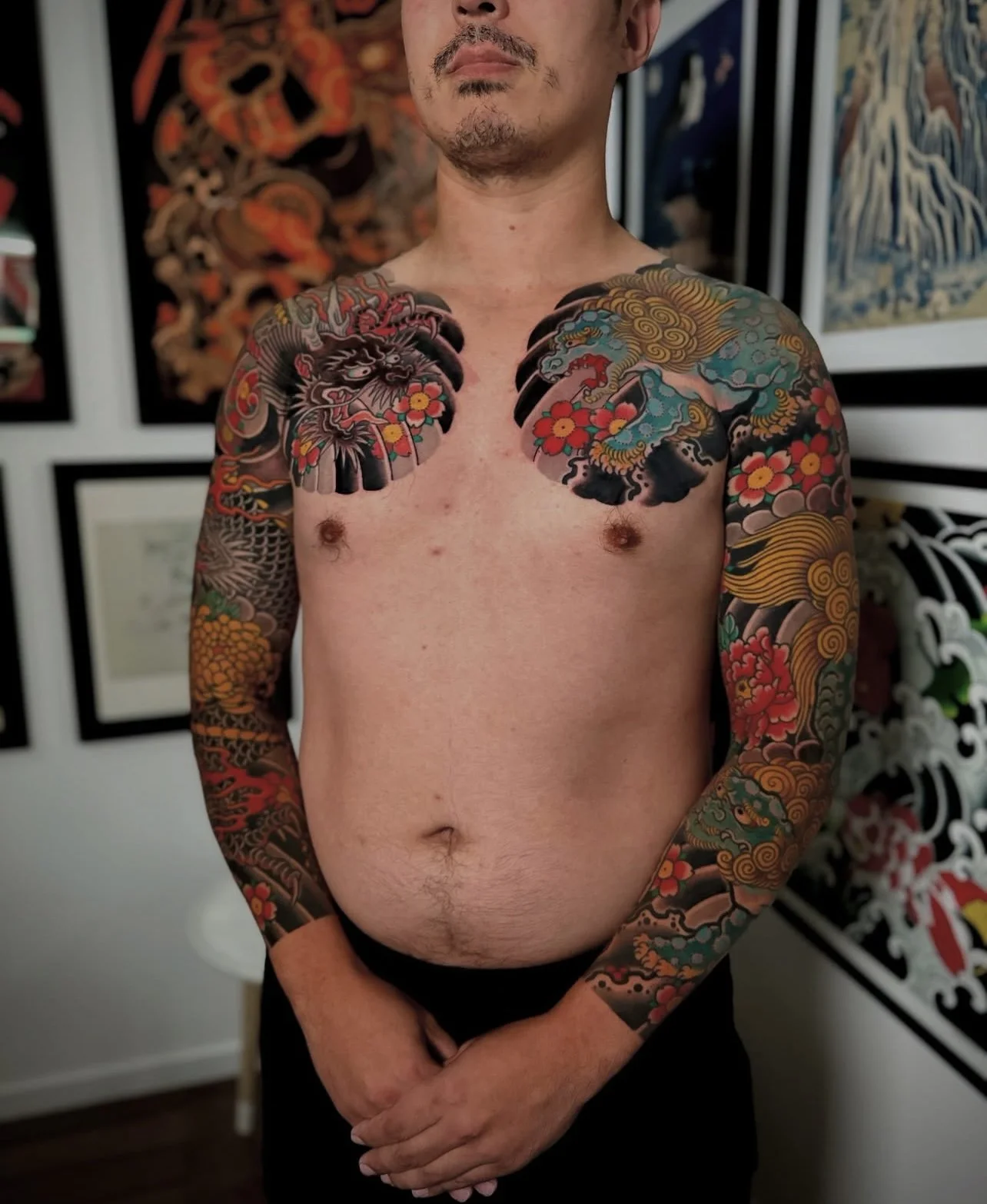
Beginning a Japanese bodysuit tattoo often starts with the arms. In this case, the foundation is built with two full sleeves—each distinct but connected through traditional motifs and cohesive design. One arm features a dragon with chrysanthemums, while the other showcases two fu dogs paired with peonies. Sakura blossoms flow across both sleeves, tying the imagery together and setting the stage for future expansion.
The dragon is a central figure in Japanese tattooing (irezumi), symbolising strength, wisdom, and protection. It’s a dynamic, high-energy element, often chosen for its powerful presence and movement across the skin.
Here, the dragon is surrounded by chrysanthemums, a flower associated with longevity, perseverance, and the imperial family. The pairing of dragon and chrysanthemum balances power with order—an ideal mix for the start of a full bodysuit. The dragon’s motion complements the structured form of the chrysanthemums, creating a strong visual flow down the arm.
The opposite arm features two fu dogs (or komainu), a traditional guardian figure meant to ward off evil spirits. It brings a grounded, protective energy to the sleeve and contrasts nicely with the dragon’s fluid motion.
Peonies surround the fu dog—bold, full flowers that symbolize wealth, honor, and courage. They’re often used in Japanese tattooing to soften the composition without taking away from the strength of the central figure. The fu dog and peony pairing leans into a more defensive, grounded feel, giving the overall bodysuit a sense of balance between movement and stability.
Both sleeves are unified with falling sakura (cherry blossoms). These small, seasonal flowers are common in Japanese tattooing and represent the fleeting nature of life. More than just background, the sakura create rhythm across both arms and help connect the dragon and fu dog thematically.
Using sakura as a transitional element also prepares the sleeves to be expanded into a full bodysuit. They can easily blend into back pieces, chest panels, or leg work later on.
These two sleeves represent a strong starting point for a traditional Japanese bodysuit. Both arms feature iconic imagery with deep cultural meaning, and the design choices are well-balanced—dragon and fu dog, chrysanthemums and peonies, motion and weight. The sakura bring cohesion, ensuring the overall piece already feels unified and intentional, even before the rest of the bodysuit is added.
Whether the next step is the back, chest, or legs, the framework is already solid.