
BLOG
Sunset now proud distributors of Anchored Tattoo Stencil Solution
Every artist will tell you that all good tattoos begin with a good stencil, and we now stock the very best.
Sunset Tattoo are excited to announce that we are now proud distributors of Anchored Stencil Solution, by world-renowned artist Nikko Hurtado.
Nikko Hurtado
Born in California in 1981 to Hispanic heritage, Nikko Hurtado grew up in the high desert drawing cartoons and characters for fun.
He went to the Art Centre of Pasadena for a few years in his teens, but it wasn’t until his early 20s when Nikko’s career changed. After calling in to see a friend in his tattoo studio, he was offered an apprenticeship.
He started tattooing the next day.
Experience brings perfection
After years of development, testing, trial and error, Nikko Hurtado has perfected a tattoo stencil solution.
With his own unique formula, the respected tattoo artist has created an effective solution, producing crisp, clear lines which last for hours.
Guaranteed to be loved by tattoo artists around the world, this special tattoo stencil solution provides an even truer representation of the original drawing.
The long-lasting formula will stay crisp for hours, allowing you to work from start to finish without having to worry about fading or missing parts of the design.
Talk to us for all your tattoo supplies
Sunset Tattoo have also been in the game a long time, and we’ve discovered what works and what doesn’t.
That’s why we started our own Tattoo Supply store, Tattoo Station with all the equipment and essentials that we use ourselves for our work.
We sell everything from our own special range of Botan Needles, through to the world famous Eternal Ink, and now we’re delighted to add Anchored Tattoo Stencil solution to the list.
Contact us today if you have any questions about our range.

Only 6 weeks until the New Zealand Tattoo Festival!
The biggest tattoo event in Australasia is back for its 7th year! The New Zealand Tattoo & Art Festival will be held at the TSB Stadium in New Plymouth on the 25 & 26 November 2017, and of course the team at Sunset will be there!
The best artists in every style of tattooing are coming to New Plymouth to tattoo you! Tattoo appointments can be made by contacting the artists direct - once announced, make sure you include the following in your email, size of tattoo, placement on body, any reference pics you have & your budget, lots artists will also be doing walk up tattoos all weekend long.
THE FESTIVAL
In only six short years, the festival has become Australasia’s biggest tattoo show, with over 250 artists and models attending. As usual, the standard of the artists attending is world class, with the likes of Ryan Ashley Malarkey, Tommy Helm, and Dan Smith coming over from the USA.
Entertainment highlights include Head Like A Hole live on Saturday night, 3 shows a day from FMX superstar Levi Sherwood, BMX, live performances from U.K fire dancer Cervena Fox & aerialist Venus Starr.
Buy your tickets now and make sure you get a place at the biggest tattoo festival in New Zealand!
By buying through Ticketek now, you can save money rather than paying at the gate. An adult 2-day pass is only $45, 10 bucks cheaper than paying on the day.
An adult day pass is $30, compared to 35 on the day, and kids 14 and under are free.
If you’re heading to New Plymouth for the festival, pre-book with one of our artists today! Simply email info@sunsettattoo.co.nz

Human history and tattooing - a timeline
The art of tattooing isn’t anything new. In fact, it’s ancient.
Literally, people have been tattooing themselves since before the dawn of civilisation. Think back to Biblical times with Jesus. Now keep going. Double that time frame to the building of the pyramids… and double that again.
We’re heading back to a time when we had to worry about sabretooth tigers and woolly mammoths.
Timeline Of Tattoos
10,000BC: We’re back in the Palaeolithic period, when tattooing for spiritual purposes is thought to have begun. We’re not certain, but it is believed tattoos were a way to ward off “evil spirits” and sickness.
3300BC: In 1991, two hikers in the Alps came across Ötzi the Iceman, a mummified Neolithic man. This 5,000 year old murder victim had over 50 tattoos!
1045BC-256BC: Tattoos in China during the Zhou Dynasty were associated with criminals, gangsters and bandits, with criminals often tattooed to warn others of their deceitful/dangerous past.
Samoa: The traditional method of Samoan tattooing has been carried out for 2000 years.
Maori: Moko tattoos of the past 1000 years differ from Polynesian tattoos in that the lines of the pattern are carved into the flesh rather than pricked into the skin.
1770s: Many of the global sailors exploring the planet along with the likes of Captain Cook, bring home tattoos from the pacific. This starts the long tradition and association of sailors and tattoos.
1876: Thomas Edison designs and patent an “electric pen”. In 1891 Samuel O’Reilly modifies the design to inject ink under the skin, and creates the first tattoo gun.
1898: An estimated one in five members of the British gentry was tattooed.
2010: The Ministry of Health releases guidelines on traditional tattooing to protect against infections, hepatitis and HIV.
2017: One in three Kiwis under the ages of 30 have a tattoo.
If you’re interested in getting a tattoo, contact Sunset tattoo studio in Auckland.

Japanese court rules tattoo artists need to be qualified doctors
A Japanese tattoo artist who argued he should not have to hold a medical certificate to tattoo people has lost his case and been ordered to pay a fine.
The decision by the Osaka District Court is likely to deal a major blow to the tattoo industry in a country where the Tattoo art is largely associated with the Yakuza, mafia-like organised crime syndicates.
Japanese law
Under Japanese law all tattoo artists require a formal medical qualification. Police raided the studio of Taiki Masuda in 2015 but he refused to pay the ensuing fine and asked for a trial.
The case, the first of its kind, has drawn international attention to tattoo culture in Japan, where historical associations with gangsters and a general social pressure for conformity.
Mr Masuda had argued that his tattooing was a form of artistic expression, and that preventing him for operating was a violation of the constitution. He said tattooists needed knowledge of safety and hygiene, but not to the same extent as licensed medical practitioners.
But the court ruled that medical knowledge and skills were indispensable in assessing the risks, and sentenced Mr Masuda to a 150,000 yen fine (about 1,850 New Zealand dollars).
Japanese culture
Mr Masuda said tattoos were "a part of traditional Japanese culture" and he would appeal against the ruling.
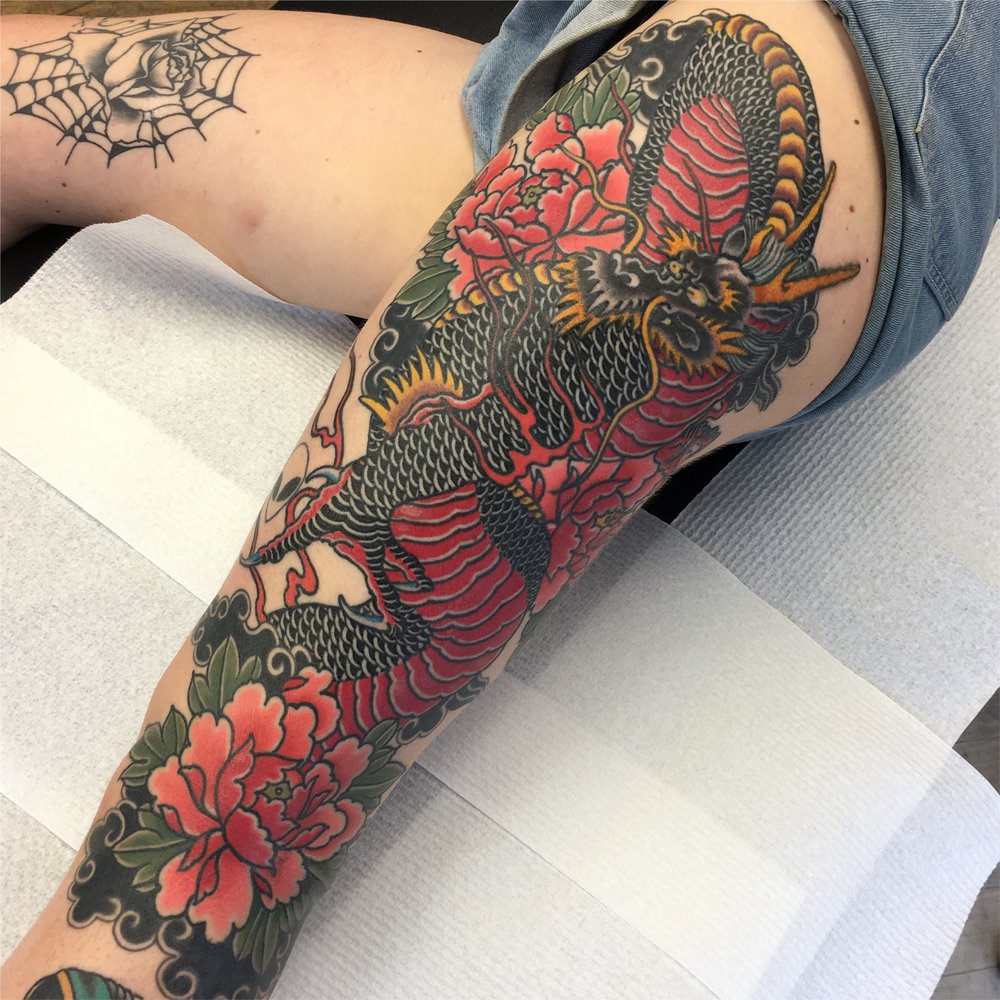
Irezumi is the name given to tattooing in Japan, and refers to many different forms of traditional Japanese tattoos, or modern forms inspired or derived from these. Just to confuse things, the word can be written AND spoken in several different ways, and also translate into several different words, although the most common is literally “insert ink”.
Japanese tattoos date back thousands of years, but their meaning and role in society fluctuates with different time periods. It was around the Kofun period (300-600 AD) that tattoos began to take on negative associations.
Criminals were tattooed as a form of punishment, so others would know they had committed a crime. It is estimated there are around 300 tattoo artists in Japan, it is unclear how many of those hold a medical qualification.
Maori tattoos in New Zealand
There are many different styles and methods of tattooing in modern day New Zealand. From traditional Maori and Pacifica styles, through to post-modern symbolism, the styles vary, but tattooing first began in New Zealand with Tā Moko.
Tā Moko
It’s impossible to establish when Tā Moko started as there are no written records before the Europeans arrived, as there was no formal Maori written language. Instead, historians have had to rely on archaeologists and the accounts of the first European settlers.
Excavated sites have found tattooing tools dating back to the very earliest settlers, with some of the tools the same as the ones used in Samoa. Although the patterns and designs vary throughout the Pacific when it comes to tattoos, the technique of rhythmically tapping a bone chisel, lashed to a small wooden shaft remains the same.
Some of the earliest accounts of tattooing in New Zealand were by Sydney Parkinson. Parkinson was Captain James Cook’s artist on board the Endeavour, when it landed in Poverty Bay in 1769. He sketched and painted local Maori displaying their Moko, and described in detail the different styles and patterns he witnessed.
The Explorers noticed that Maori women were not as extensively tattooed as the men. Their upper lips were outlined, usually in dark blue, and their nostrils were also very finely incised. The chin moko was always the most popular, and continued to be practiced even into the 1970s.
Not just a pretty face
Tā Moko facial tattoos aren’t just for decoration, they also tell a story. A person’s ancestry is indicated on each side of the face. The left side is generally (but not always, depending on the tribe) the father's side, while the right-hand side indicates the mother's ancestry. If one side of a person's ancestry was not of rank, that side of the face would have no Moko design. Likewise if, in the centre forehead area there is no Moko design, this means the wearer either has no rank, or has not inherited rank.
Come to Sunset for a Maori tattoo
If you’re interested in getting a Maori tattoo design, then you should come see Tristan at Sunset Tattoo.
Tristan is of Te Rarawa descent, from the Hokianga in the far north. He graduated from the New Zealand Maori Arts and Crafts institute in 2014 with a diploma in Whakairo Rakau (traditional wood carving). Not long before Tristan graduated, he approached Tom about learning the craft of tattooing and bringing his knowledge of carving and Maori art over to the medium.
Tristan is now tattooing full time with Sunset, and specializes in Ta Moko, Blackwork, pattern work, geometric and dot-work tattoo styles.
