
BLOG
A brief History of Tattoos in New Zealand
The styles and methods of tattooing in 21st century New Zealand are extremely diverse. From traditional Maori and Pacifica styles, through to modern Anime, the style is varied, but tattooing first began in New Zealand with Ta Moko.
It’s impossible to establish when Ta Moko started as there are no written records pre-colonisation, as there was no formal Maori written language. Instead, historians have had to rely on archaeologists and the accounts of the first European settlers. Excavated sites have found tattooing tools dating back to the very earliest settlers, with some of the tools the same as the ones used in Samoa. Although the patterns and designs vary throughout the Pacific when it comes to tattoos, the technique of rhythmically tapping a bone chisel, lashed to a small wooden shaft remains the same.
Some of the earliest accounts of tattooing in New Zealand were by Sydney Parkinson. Parkinson was Captain James Cook’s artist on board the Endeavour, when it landed in Poverty Bay in 1769. He sketched and painted local Maori displaying their Moko, and described in detail the different styles and patterns he witnessed.
The Explorers noticed that Maori women were not as extensively tattooed as the men. Their upper lips were outlined, usually in dark blue, and their nostrils were also very finely incised. The chin moko was always the most popular, and continued to be practiced even into the 1970s.
Ta Moko facial tattoos aren’t just for decoration, they also tell a story. A person’s ancestry is indicated on each side of the face. The left side is generally (but not always, depending on the tribe) the father's side, while the right hand side indicates the mother's ancestry. If one side of a person's ancestry was not of rank, that side of the face would have no Moko design. Likewise if, in the centre forehead area there is no Moko design, this means the wearer either has no rank, or has not inherited rank.
Three amazing facts about tattoos
Tattoos and the law
You’d think that because it’s your body, you can do what you want with it, right? Guess again. Tattoos have a long and complicated history with the Law, all over the globe. Tattoos in Japan were illegal during parts of the 19th and 20th Centuries, and even today are banned from many public sectors, such as bath houses or Government jobs. And it’s not just a history lesson. New York City banned tattoos between 1961 and 1997, due to health concerns. Even today in turkey, tattoos are banned by law.
Prison tattoos
While tattoos can be a form of expression, rebelliousness, or even just a drunken mistake, some tattoos are a lot more serious. Prison tattoos are fraught with symbolism and meaning. From the Yakuza in Japan, to White Supremacist groups in the States, tattoos are a way to tell a story, or to tell others who or what you represent. Tattooing in American prisons is strictly forbidden, but of course that doesn’t stop it from happening. The tattooing equipment can be anything from modified ballpoint pens, to guitar strings.
Battle of the sexes
Did you know more women have tattoos than men? A recent survey (admittedly in America), showed that 59% of people tattooed were women, compared to 41% of men. Women may be more adventurous when it comes to getting a tattoo, but they also tend to regret it more than men, with a higher percentage opting for tattoo removal. This is due to the fact that women tend to add more significance to their ink, usually having a deeper meaning for them.
So there you go, three simple, yet incredible facts about tattoos. If you’re interested in getting your first, or fiftieth tattoo, come see us here at Sunset Studios.
Japanese Tattoos
Did you know that in some Japanese bath houses, anyone with a tattoo is refused entry? Seems a bit harsh, even for a conservative country like Japan, but the reason goes back hundreds of years…
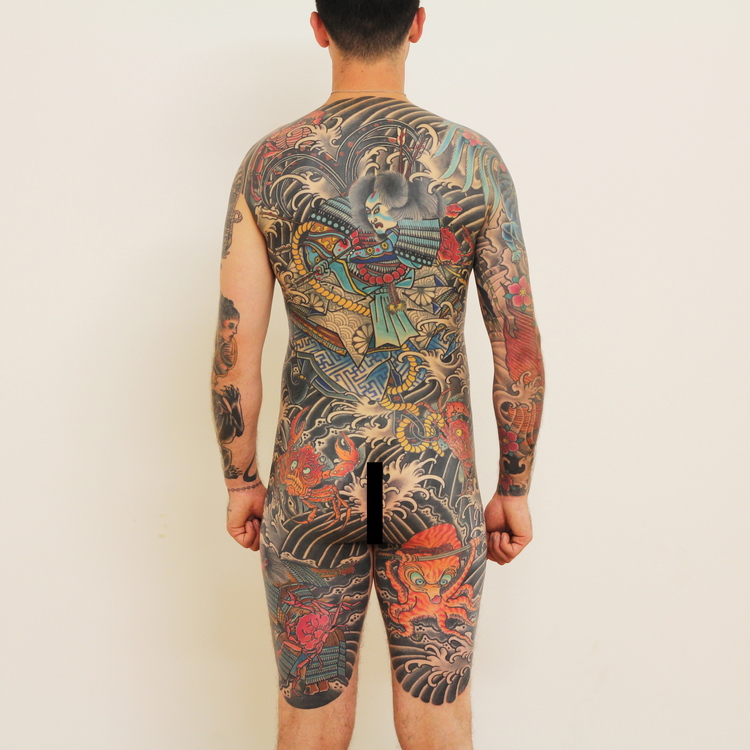
Irezumi is the name given to tattooing in Japan, and refers to many different forms of traditional Japanese tattoos, or modern forms inspired or derived from these. Just to confuse things, the word can be written AND spoken in several different ways, and also translate into several different words, although the most common is literally “insert ink”.
Japanese tattoos date back thousands of years, but their meaning and role in society fluctuates with different time periods. It was around the Kofun period (300-600 AD) that tattoos began to take on negative associations. Criminals were tattooed as a form of punishment, so others would know they had committed a crime.
Tattoo fads came and went over the next thousand years, but the stigma lingered, and at the beginning of the Meiji period, tattoos were outlawed altogether. Of course, when you outlaw anything, you only drive it underground, so tattoos were now officially the cool thing to have, and as Japan opened up to the West, many came to seek the skills of traditional Japanese Tattoo Artists.
The connotations with criminality still persisted, with many associating tattoos with the Yakuza, Japan’s infamous mafia. This gave tattoos in Japan a stigma which is still seen today in the bath houses and other Japanese businesses. Japanese tattoos were legalised again after the war, but even today, a tattoo studio is hard to find. It is estimated there are around 300 tattoo artists in Japan; an incredibly small percentage considering its 127 million population.
If you’re interested in Japanese tattoos, then come see Tom at Sunset Studios. He's spent years studying Japanese tattoos and is always up for a chat about any design ideas you have.
Remember your New Zealand trip with a Maori Tattoo!
New Zealand is arguably the most beautiful place in the world, with very few other countries able to match our sheer diversity when it comes to natural landscape. From the North with its sub-tropical rainforests, down to the South and its frozen glaciers, Aotearoa is a natural wonderland.
It's no surprise then that we attract millions of tourists each year: almost 3 million in 2014. Bearing in mind that New Zealand only has a population of 4.5 million, that's two thirds of the country!
Many of these tourists want something to remember their fantastic trip by, and they need something more sentimental than a fridge magnet. That's where we come in. A Maori tattoo is the perfect memento of New Zealand. It's a unique part of our culture, signifies a special time in your life, and of course, looks fucking awesome.
Tristan is our resident artist who specialises in Maori tattoos and Pacifica designs. Being Maori himself, and studying at the New Zealand Maori Arts & Crafts Institute, he understands the meaning, complexity and history behind genuine Maori tattoos. If you're interested in an authentic Maori tattoo, then this is the man to talk to.
Call us today to book your consultation, or drop us an email if you plan on coming to Auckland and would like to leave with something special. For Maori tattoo design, there's simply no one better to come to.
Tattoo safety and hygiene at Sunset.
Hygiene is paramount when getting a tattoo, and we here at Sunset Tattoo take our responsibility very seriously. When selecting an Auckland tattoo studio you should make sure that they follow the strict Health & Safety guidelines of the Auckland council.
Sunset Tattoo is the Auckland tattoo studio you can trust. Coming to us for a tattoo is not only an enjoyable and stress-free experience, but a safe one. We practice the highest level of hygiene and meticulously adhere to the Auckland council Health & Safety guidelines. Our studio itself is spotless, never mind our needles!
How do we make our Auckland tattoo studio safe and sterile?
We always keep our tattoo accessories in the most sterile condition. Before we start working on your tattoo, our tattoo artist will disinfect and shave the area where you want your tattoo. We do this with disposable razors that we only use once. We will also show you the sealed tattoo needle and open the pouch in front of you. After we’re finished with your tattoo, we’ll throw the needle out. Each needles is only used once, and you can see this for yourself, putting your mind at rest.
It is likely that your skin will bleed a little when getting a tattoo. That’s why all our tattoo artists are wearing gloves throughout the entire tattooing process. It’s safer for you and for them. You could walk into a hospital and not notice the difference. That’s how clean and hygienic our Auckland tattoo studio is!
For a safe, and friendly tattoo experience, visit our Auckland tattoo studio today, or contact us via phone: +64 (9) 376-3423 or drop us an email on: info@sunsettattoo.co.nz